Top 2025 Water Detection Sensors: How to Choose the Best for Your Needs
In today's rapidly evolving technological landscape, the importance of water detection sensors has become increasingly paramount. As highlighted by Dr. Emily Carter, a leading expert in environmental monitoring, "The ability to detect water intrusion early not only protects property but also plays a vital role in safeguarding the environment." With the continued rise in water-related incidents, understanding and selecting the right Water Detect Sensor for your specific needs is crucial.
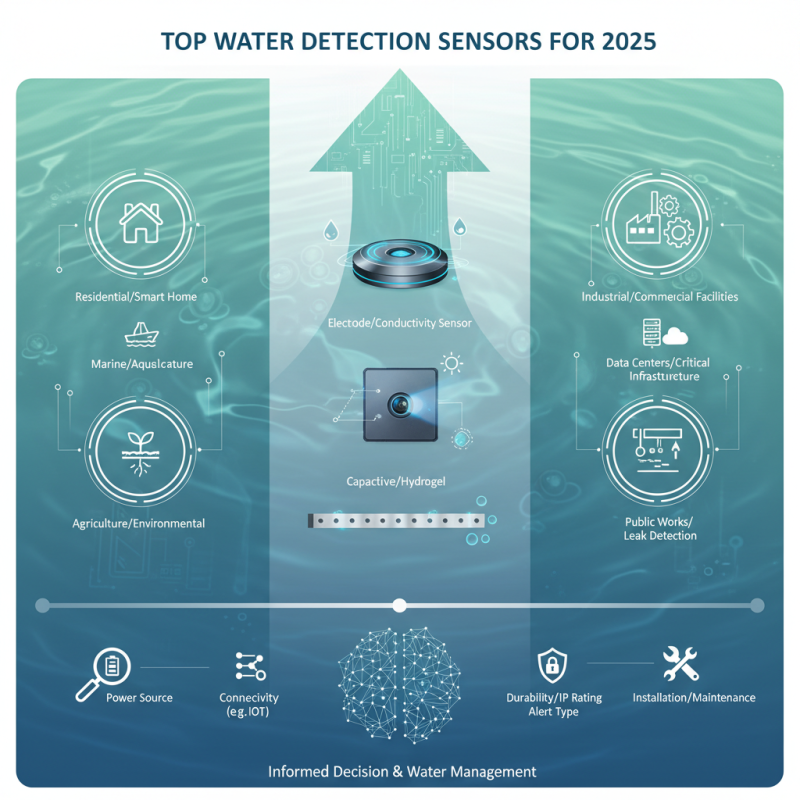
As we move toward 2025, a diverse array of water detection sensors is emerging, each tailored to different applications and environments. From residential properties to industrial settings, the right choice can significantly impact both efficiency and safety. This article aims to explore the top water detection sensors available in 2025, guiding you through the features and functionalities that matter most when making your selection.
Ultimately, choosing the best water detection sensor can be pivotal in preventing damage and ensuring peace of mind. By equipping yourself with the right knowledge and expertise, you can make an informed decision that effectively meets your needs while contributing to greater water management practices in various settings.
Understanding Water Detection Sensors: Types and Technologies
Water detection sensors play a crucial role in various applications, from flood prevention to leak detection in industrial facilities. Understanding the different types of sensors available can help users select the most suitable option for their needs. Generally, water detection sensors can be categorized into capacitive, resistive, and ultrasonic types. Capacitive sensors measure changes in electrical capacitance caused by water presence, while resistive sensors determine the conductivity of water, making them ideal for simple leak detection tasks. On the other hand, ultrasonic sensors use sound waves to detect water levels or leaks, providing non-invasive and highly accurate measurements.
According to a report by TechSci Research, the global market for water detection sensors is projected to grow significantly, reaching approximately USD 2 billion by 2025. This growth underscores the increasing importance of these devices across various sectors, including residential, commercial, and industrial applications. As climate variability leads to increased flooding incidents, the demand for reliable water detection systems is expected to accelerate. Moreover, advancements in technologies, such as IoT integration and improved data analytics, enhance sensor capabilities, providing users with real-time monitoring and alerts, thereby improving overall safety and operational efficiency.
Top 2025 Water Detection Sensors Statistics
Key Features to Consider When Choosing a Water Detection Sensor
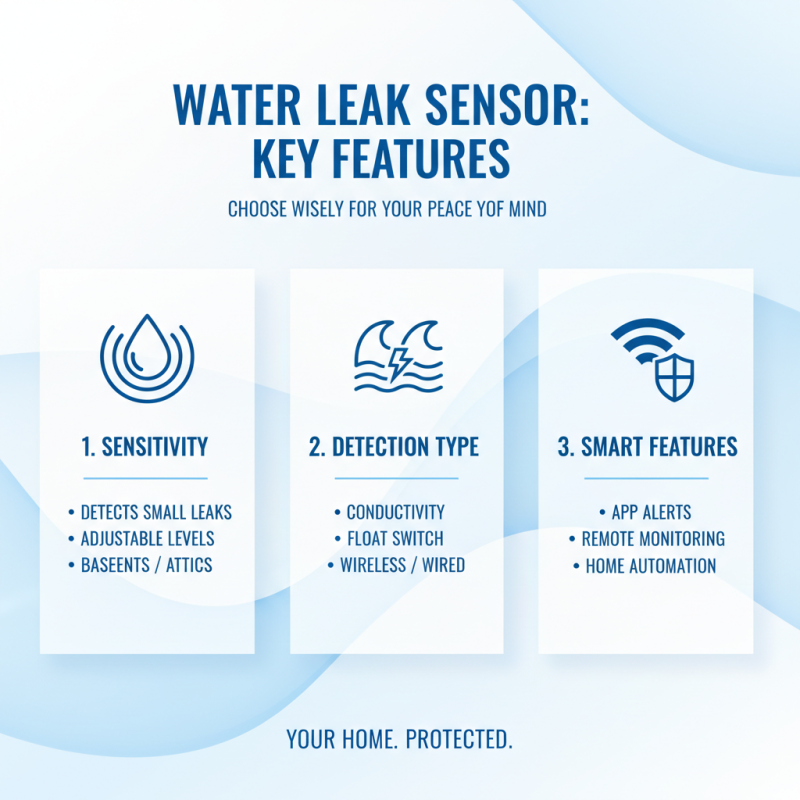
When selecting a water detection sensor, understanding the key features that align with your specific needs is crucial. One of the most important aspects to consider is sensitivity. A highly sensitive sensor can detect even the smallest amounts of water, making it ideal for areas prone to leaks or spills. Look for sensors that offer adjustable sensitivity levels to suit different environments, such as basements or attics, where moisture levels may vary.
Another critical feature is the sensor’s response time. The faster a sensor can detect water, the sooner you can take action to prevent damage. Opt for sensors that provide real-time alerts via mobile apps or alarms. Additionally, consider the power source of the sensor, as some models operate on batteries while others may require a direct power supply. Battery-operated sensors offer flexibility in placement, while wired models ensure a constant power supply, reducing the risk of failure.
Tips: Always check the range of connectivity options. Sensors with Wi-Fi capabilities allow you to monitor your space remotely, providing peace of mind when you're away. Also, evaluate the sensor's durability, particularly if it will be installed in harsher environments, such as outdoors or in industrial settings where exposure to elements is a concern.
Top Water Detection Sensors of 2025: A Comprehensive Review
As the demand for reliable water detection sensors continues to rise, various models with advanced features are set to dominate the market in 2025. A comprehensive review of top water detection sensors reveals that sensitivity, response time, and ease of installation are essential factors to consider. According to recent industry reports, the global water leak detection market is projected to grow significantly, driven by increased awareness about water conservation and damage mitigation. Key features such as real-time monitoring and integration with smart home systems are becoming industry standards.
When choosing a water detection sensor, consider the sensor's specific application. For instance, areas prone to leaks, like basements or kitchens, may require sensors with higher sensitivity or additional features like automatic shut-off capabilities. Tips for installation include placing sensors near water sources or vulnerable areas, ensuring they are elevated to avoid false alarms from minor spills. Connecting sensors to a mobile application can provide instant alerts, enhancing your home's overall security.
Moreover, it’s crucial to consider the long-term operational costs associated with maintaining and replacing sensor batteries or systems. Selecting models with a longer battery life can lead to significant savings over time. Additionally, opt for devices that allow for easy firmware updates to stay current with the latest technology and functionality enhancements. By understanding these key aspects, you can select the best water detection sensor tailored to your specific needs in 2025.
Comparing Price Points: Budget vs. Premium Water Detection Sensors
When selecting a water detection sensor, price is often a primary consideration, as these devices can vary significantly from budget to premium levels. According to industry reports, budget sensors typically range from $30 to $100, providing basic functionality such as moisture detection and alerts. These economical options are suitable for simple applications, like preventing leaks in residential settings. However, their limitations often include less reliable detection capabilities and fewer advanced features, leading to a higher risk of missed alerts in complex environments.
In contrast, premium water detection sensors, which can cost between $200 and $500, offer enhanced features such as smart connectivity, advanced leak detection algorithms, and integration with home automation systems. A study from the Water Sensor Market suggests that premium sensors not only increase reliability—reducing false alarms by up to 25%—but also provide faster response times, crucial for preventing extensive water damage. For businesses and critical infrastructures, such sensors can translate into significant cost savings, mitigating the financial impact of water leaks and ensuring ongoing operations without interruption. As technology advances, investing in a higher-quality sensor can provide long-term benefits that outweigh the initial costs.
Installation and Maintenance Tips for Optimal Sensor Performance
Ensuring optimal performance from your water detection sensors hinges significantly on proper installation and regular maintenance. Industry reports indicate that up to 30% of sensor failures can be attributed to improper installation techniques. When installing water detection sensors, it's crucial to follow the manufacturer's guidelines closely. This includes selecting the right location, ensuring that the sensors are mounted securely, and protecting them from environmental factors such as high humidity or extreme temperatures that could adversely affect their accuracy.
Furthermore, maintenance plays a pivotal role in sustaining the effectiveness of these sensors. According to the latest data from the Water and Wastewater Equipment Manufacturers Association, regular checks should be conducted at least once every six months. During these inspections, it’s essential to clean the sensors to prevent buildup that can hinder performance. Additionally, evaluating the calibration and functionality of the sensors ensures they are responding accurately to water exposure. Neglecting these maintenance steps can lead to undetected leaks, potential damage, and costly repairs, underlining the importance of a proactive approach to sensor care.
Top 2025 Water Detection Sensors: How to Choose the Best for Your Needs
| Sensor Type |
Detection Method |
Sensitivity |
Installation Ease |
Maintenance Level |
| Capacitive Sensor |
Capacitance Change |
High |
Moderate |
Low |
| Conductive Sensor |
Electrical Conductivity |
Medium |
Easy |
Medium |
| Optical Sensor |
Light Reflection |
Very High |
Difficult |
High |
| Ultrasonic Sensor |
Sound Waves |
High |
Moderate |
Medium |
| Vibration Sensor |
Vibration Detection |
Medium |
Easy |
Low |





 Contact WhatsApp
 Contact Phone
 Contact Email