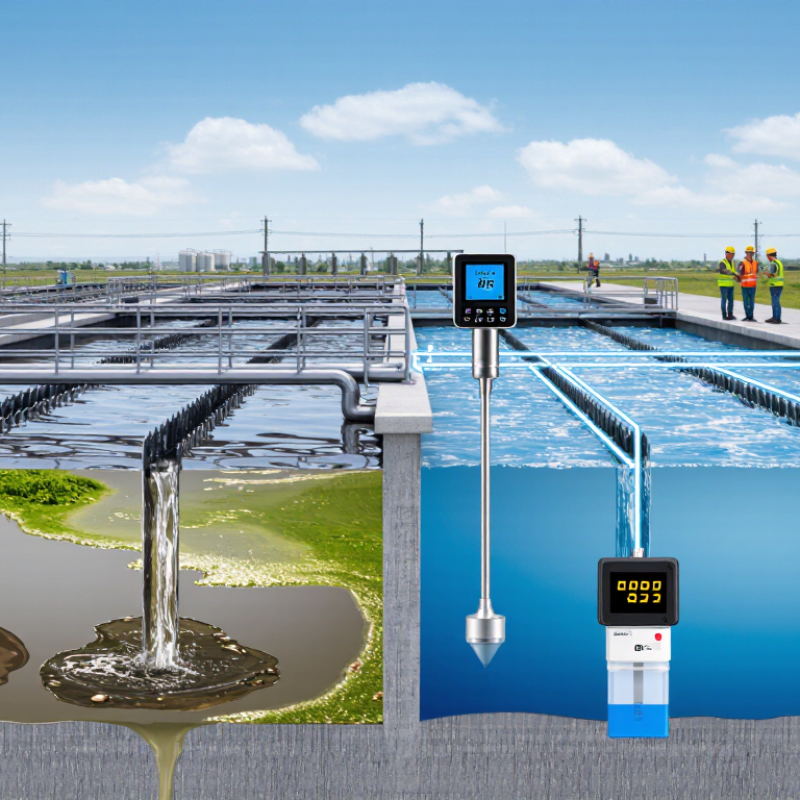
Choosing the best Ammonia Nitrogen Sensor begins with the water, not the product brochure. Wastewater may contain suspended solids, oils, salts, biological growth, and changing pH. Each factor can distort readings or shorten sensor life. A device that performs well in a clean laboratory sample may struggle beside an aeration basin.
Dr. David Sedlak, a respected environmental engineering researcher, offers a useful principle: “You can’t manage what you can’t measure.” The idea applies directly to ammonia monitoring. However, measurement quality depends on more than selecting a modern probe. Operators should compare the required detection range, response time, temperature compensation, calibration method, and maintenance demands. Optical, ion-selective, and reagent-based systems each have practical strengths. None is perfect.
Look closely at the installation site. Will the sensor face heavy fouling? Can technicians reach it safely? Does the system provide stable readings during low ammonia events? These details matter. A low purchase price may become expensive when cleaning is frequent or replacement parts are difficult to obtain.
Reliable selection also requires field evidence. Review independent test data, reference methods, warranty terms, and the supplier’s technical support. If possible, run a short pilot using real samples from the target process. Laboratory water can be misleading. Even experienced teams sometimes choose a sensor before defining their decision needs. That is a weakness worth admitting.
The right Ammonia Nitrogen Sensor should produce trustworthy data, support timely treatment adjustments, and remain practical over years of operation. Accuracy matters. Usability matters too.
Choosing an ammonia nitrogen sensor starts with a monitoring question, not a product catalog. Do you need early warning, regulatory records, process control, or occasional troubleshooting? Each goal changes the required range, accuracy, response time, and data storage. A discharge alarm may need rapid readings every few minutes. A compliance program may demand documented calibration and traceable records. Keep the purpose specific.
Define the expected concentration before selecting the measurement principle. Estimate normal, peak, and minimum values from recent samples, not guesswork. For example, a treatment basin may vary sharply after feeding, cleaning, or heavy rain. Record pH and temperature at the same time, because ammonia chemistry responds to both. Suspended solids, color, oil, salinity, and biofilm can also distort readings or foul surfaces. Test real samples.
Installation location deserves equal attention. Place the sensor where flow is representative, yet safe from bubbles, foam, and dead zones. Check whether sunlight, vibration, pressure, or restricted access will affect performance. Set a calibration schedule based on drift, fouling, and the cost of wrong decisions. Independent laboratory checks can reveal bias that routine checks miss. I have seen reliable instruments produce weak data after poor sampling design. That limitation is easy to overlook. Leave room for review when field results disagree with laboratory results.
At 20°C, increasing pH changes the proportion of total ammonia nitrogen (TAN) present as toxic, unionized ammonia (NH₃). Because temperature and pH strongly affect ammonia conditions, sensor selection should match the monitoring goal, expected concentration range, water matrix, and required compensation functions.
The values are based on the ammonia equilibrium relationship using a pKa of approximately 9.25 at 20°C. For low-level monitoring, verify detection limits and interference resistance; for process control, also evaluate response time, fouling resistance, calibration stability, and automatic temperature or pH compensation.
How to Choose the Best Ammonia Nitrogen Sensor?
Ammonia nitrogen sensors differ mainly in detection speed, maintenance, and matrix tolerance. Ion-selective electrode sensors provide rapid readings for continuous monitoring. However, salinity, pH, and interfering ions can shift results. Colorimetric analyzers use chemical reagents and often deliver stronger laboratory agreement. The trade-off is regular reagent replacement and more complex servicing. Gas-permeable membrane and optical systems reduce chemical handling, but membrane fouling and calibration drift still require attention.
The US EPA’s 2013 Aquatic Life Ambient Water Quality Criteria for Ammonia shows that toxicity changes with pH and temperature. A sensor should therefore record these factors beside ammonia nitrogen values. APHA Standard Methods 4500-NH3 identifies phenate and selective-electrode procedures as established analytical approaches. ISO 11732 also supports flow-analysis methods for ammonium measurement. These references matter when online readings must be checked against laboratory results. No sensor is perfect.
Tips: Match the technology to the water matrix, not only the advertised detection limit. For a clean process stream, an ISE may be practical. For wastewater with suspended solids, choose automatic cleaning and verify results with weekly grab samples. Check response time at the actual ammonia range. A sensor reporting 0.01 mg/L resolution may add little value when the plant normally measures 20 mg/L. Keep a pH and temperature log. Small errors become visible later. Calibration records, membrane replacement dates, and side-by-side laboratory tests create the evidence needed for reliable decisions.
| Technology / Detection Method | Measurement Principle | Primary Species Measured | Typical Working Range* | Typical Response Time | Continuous Monitoring Suitability | Main Advantages | Common Limitations and Interferences | Maintenance Requirements | Best-Fit Applications |
|---|---|---|---|---|---|---|---|---|---|
| Ammonium Ion-Selective Electrode (ISE) | Measures the electrical potential generated by an ion-selective membrane in response to ammonium-ion activity. The result follows a logarithmic relationship with ammonium concentration. | Ammonium ion (NH4+); ammonia nitrogen is estimated from NH4+ and pH when required. | Approximately 0.1–10,000 mg/L as N, depending on membrane design, ionic strength, sample matrix, and conditioning. | Usually seconds to several minutes in a well-mixed sample. | High | Direct electrical output, relatively low operating cost, compact design, and suitable for online process control. | Results depend on pH, temperature, ionic strength, and membrane selectivity. Potassium and other cations may interfere. It measures NH4+ rather than un-ionized NH3. | Regular calibration, cleaning, membrane or cap replacement, and verification with standards. Stable flow and representative sampling are important. | Wastewater treatment, aquaculture, process water, and applications requiring continuous ammonium trending. |
| Gas-Sensing Ammonia Electrode | Ammonium is converted to dissolved ammonia gas at a controlled alkaline pH. Ammonia diffuses through a gas-permeable membrane and changes the internal pH, which is measured electrochemically. | Ammonia (NH3) after chemical conversion; can be related to total ammonia nitrogen when pH and temperature are known. | Approximately 0.1–1,000 mg/L as N, depending on configuration and sample conditions. | Generally a few minutes. | Medium–High | Good selectivity for ammonia, useful over a broad concentration range, and less directly affected by many dissolved ions than a conventional ammonium ISE. | Requires pH adjustment and a stable gas-permeable membrane. Temperature, volatile amines, membrane fouling, and sample flow can affect the result. | Membrane replacement, internal solution checks, cleaning, and frequent calibration where the sample is dirty or highly variable. | Industrial wastewater, laboratory measurements, and streams with elevated ammonia concentrations. |
| Colorimetric Indophenol Method | Ammonia reacts with hypochlorite and a phenolic compound, typically with a catalyst, to form a blue-green indophenol dye. Absorbance is measured photometrically. | Ammonia and ammonium after conversion under controlled chemical conditions; commonly reported as ammonia nitrogen. | Commonly about 0.01–50 mg/L as N, with dilution or method changes used for higher concentrations. | Typically several minutes because reagents must react before measurement. | High | Good sensitivity and established analytical performance. Suitable for automated analyzers when reagent handling is acceptable. | Consumes reagents and creates chemical waste. Turbidity, color, oxidizing or reducing substances, residual chlorine, and incomplete digestion can influence results. | Reagent replacement, tubing and pump maintenance, optical-cell cleaning, blank checks, and periodic calibration. | Municipal wastewater, surface water, laboratory testing, and automated online analyzers requiring low-level detection. |
| Nesslerization | Ammonia reacts with Nessler reagent to produce a yellow-to-brown color that is measured photometrically. | Ammonia and ammonium under the specified test conditions; usually reported as ammonia nitrogen. | Approximately 0.02–2 mg/L as N for common photometric procedures, with method-dependent extensions. | Usually several minutes. | Medium | Simple color development and good sensitivity for suitable laboratory samples. | Nessler reagent contains mercury compounds, creating significant toxicity and disposal concerns. Color, turbidity, sulfide, and some organic compounds can interfere. | Strict hazardous-waste management, reagent control, optical-cell cleaning, and calibration are required. | Legacy laboratory procedures where mercury-containing reagents are permitted; generally not preferred for modern online systems. |
| Optical Ammonia Sensor | Uses an ammonia-sensitive indicator or optode whose fluorescence, absorbance, or color changes when ammonia diffuses into the sensing layer. | Usually dissolved NH3; total ammonia nitrogen requires compensation or conversion using pH and temperature. | Often approximately 0.01–100 mg/L as N, depending on indicator chemistry and optical design. | Seconds to several minutes. | High | Low electrical noise, little or no liquid reagent consumption, and potential for compact, low-power instrumentation. | Optical fouling, biofilm, ambient light, dye aging, pH dependence, temperature effects, and limited lifetime of the sensing layer may affect performance. | Cleaning, optical verification, periodic calibration, and replacement of the sensing cap or optical film when required. | Remote monitoring, aquaculture, environmental water, and applications where reagent-free operation is valuable. |
| Conductivity-Based Ammonia Measurement | Uses changes in electrical conductivity associated with ammonia-related ionic reactions or a selective gas-transfer and absorption step. | Indirect ammonia or ammonium measurement; the signal is matrix-dependent and is not inherently selective for ammonia nitrogen. | Highly application-dependent; commonly used for trend monitoring rather than a universal concentration range. | Seconds to minutes. | Medium | Simple electronics, fast signal response, and potentially low sensor cost. | Strongly affected by background salinity, conductivity, temperature, pH, and other dissolved ions. Selectivity is generally lower than ISE or colorimetric methods. | Frequent cleaning and matrix-specific calibration are usually necessary. | Controlled process streams with stable water chemistry and applications focused on changes or alarms rather than definitive laboratory values. |
| Ion Chromatography | Separates ammonium from other ions on an ion-exchange column and quantifies it using conductivity or another detector. | Ammonium ion; results can be reported as ammonium, ammonia, or nitrogen according to the reporting convention. | Typically low µg/L to hundreds or thousands of mg/L, depending on the column, detector, dilution, and method. | Usually several minutes to tens of minutes per analysis. | Low–Medium | High selectivity and strong capability for multi-ion analysis, making it useful as a reference or confirmation method. | Higher capital and operating cost, trained operators, eluent consumption, sample filtration requirements, and limited suitability for rapid field deployment. | Column protection, eluent preparation, calibration, suppressor or detector checks, and routine system cleaning. | Laboratory confirmation, regulatory testing, research, and complex samples containing several ionic nitrogen compounds. |
| Laboratory Distillation and Titration | Ammonia is distilled from an alkaline sample and captured in an acidic solution, then quantified by titration or another approved measurement step. | Ammonia nitrogen; suitable digestion or distillation procedures may be used when broader nitrogen fractions are required. | Method-dependent and commonly suitable for low-to-high concentration laboratory samples. | Typically tens of minutes to several hours. | Low | Useful for difficult matrices and recognized as a reference-style laboratory approach when performed under a validated method. | Labor-intensive, slow, requires heating and chemical handling, and is not suitable for real-time process control. | Glassware cleaning, reagent preparation, blanks, recovery checks, and careful control of distillation conditions. | Regulatory laboratories, wastewater characterization, and confirmation of samples with complex or interfering matrices. |
How to Choose the Best Ammonia Nitrogen Sensor?
Accuracy is only meaningful within a stated range. Check whether the sensor measures total ammonia nitrogen or dissolved ammonia. These values are not interchangeable. The U.S. EPA Method 350.1 lists a laboratory detection limit near 0.01 mg/L and an approximate working range of 0.02–2.0 mg/L. A field sensor should approach that performance under real water conditions, not only in clean calibration solutions. Watch for interference from pH, temperature, salinity, and suspended solids. A neat specification can still mislead.
Response time matters when conditions change quickly. A sensor claiming a ten-second response may need several minutes to stabilize after installation. Compare T90 response time, meaning the time needed to reach 90% of the final reading. ISO 11732:2005 and APHA Standard Methods emphasize controlled sampling and calibration, but they do not guarantee identical field behavior. This distinction is easy to miss. Detection limits also deserve caution. A low limit is useless if drift hides changes below 0.05 mg/L.
Tips: Request raw calibration data, not only a brochure graph. Test the sensor with certified standards near your expected low and high points. Repeat tests after fouling, temperature changes, and several days of continuous use. Keep a manual reference method for comparison. Imperfect data is still useful when its limitations are recorded.
Choosing an ammonia nitrogen sensor begins with the installation site, not the brochure. Measure pipe diameter, flow velocity, temperature, turbidity, and access space before comparing specifications. A sensor placed in stagnant water can report convincing but misleading values. Avoid dead zones. For open channels, confirm immersion depth and mounting stability during storms. In pressurized lines, check pressure ratings, insertion length, and safe isolation procedures. Keep the probe away from chemical dosing points, where mixing may be incomplete.
Maintenance should fit the operator’s actual routine. A removable sensor saves time when weekly cleaning is realistic. If staff can inspect only monthly, choose stronger fouling resistance and automatic diagnostics. No sensor is maintenance-free. Wipe biological growth gently, inspect cables for swelling, and verify calibration with suitable standards. Record readings before and after cleaning. This simple log can reveal drift that alarms miss. Calibration intervals should follow water conditions, not a convenient calendar. I would not trust a fixed interval forever.
Environmental resistance deserves equal attention. Check compatibility with salinity, suspended solids, oils, cleaning agents, and seasonal temperature changes. Outdoor equipment needs sealed connectors, UV-resistant housing, and impact protection. Condensation inside a connector is easy to overlook. Request test data for the actual operating range, not only laboratory conditions. Confirm response after temperature shifts, because cold mornings can distort comparisons. A lower purchase price may become expensive through cleaning, downtime, and replacement parts. Leave room for uncertainty.
The purchase price is only one part of sensor cost. Include calibration labor, cleaning, membranes, reagents, power, and unplanned downtime. A low-priced probe may become expensive in wastewater containing grease, suspended solids, or biofilm. US EPA Method 350.1 lists a practical ammonia nitrogen range near 0.01–2.0 mg/L as nitrogen. Your sensor should match the real process range, not a brochure’s maximum. Over-ranging can hide spikes and weaken control decisions.
Compatibility matters just as much. Check sample temperature, pH, salinity, flow rate, and installation depth. The US EPA’s 2013 Aquatic Life Ambient Water Quality Criteria for Ammonia—Freshwater shows that ammonia toxicity changes with pH and temperature. Therefore, automatic compensation is not a luxury in variable systems. Confirm 4–20 mA, Modbus, alarm relays, data logging, and enclosure protection before ordering. ISO 15839:2003 also emphasizes performance testing for online water-quality equipment. A sensor that cannot communicate with the existing controller creates another cost.
Tips: Build a three-year cost sheet. Add two calibration visits per year, replacement parts, labor hours, and estimated downtime. Test the sensor beside a laboratory method for several weeks. EPA Method 350.1 can provide a useful comparison. Do not assume perfect agreement. Fouling, matrix effects, and sampling delays still need review. A cheaper system may work, but only after the plant proves it.