How to Choose the Best Water pH Sensors for Your Needs?
Choosing the right Water pH Sensors is essential for various applications. According to Dr. Emily Rivers, an expert in environmental monitoring, "The accuracy of pH sensors can significantly impact water quality assessments." Selecting a sensor involves understanding your specific needs.
Different sensors have unique features. Some are more suitable for industrial use, while others excel in laboratory settings. It’s crucial to consider factors like temperature compensation and sensor lifespan. For instance, investing in a durable sensor may save costs in the long run.
However, many overlook the calibration process. Regular calibration is vital for maintaining accuracy. Neglecting this can lead to misleading results, compromising data reliability. Choosing the ideal Water pH Sensors requires careful consideration of both specifications and maintenance requirements.
Understanding Water pH Sensors: Basics and Functionality
Water pH sensors are essential tools for monitoring acidity or alkalinity in various environments. They operate based on the principle of measuring hydrogen ion concentration. A typical sensor consists of two main components: a glass electrode and a reference electrode. The glass electrode responds to pH changes, while the reference electrode provides a stable reference point. Together, these components help deliver accurate readings.
When selecting a water pH sensor, it’s crucial to consider a few factors. The sensor's range should match your specific needs. For instance, environments like aquariums require a narrower range than agricultural applications. Calibration frequency is another important aspect. Some sensors need daily calibration, while others might last longer without adjustment. Regular upkeep is vital for reliable results, yet many users overlook this part.
Sensitivity is key when evaluating pH sensors. Some sensors have better sensitivity to small changes in pH levels. This feature can be advantageous in specific experiments. However, this also means those sensors can be more prone to interference from contaminants. Users must weigh these pros and cons carefully. The choice of sensor often reflects personal priorities and understanding of water chemistry.
How to Choose the Best Water pH Sensors for Your Needs?
| Sensor Type |
Measurement Range |
Accuracy |
Response Time |
Application |
Price Range |
| Digital pH Sensor |
0 to 14 pH |
±0.1 pH |
1-3 seconds |
Aquaculture, Hydroponics |
$50 - $150 |
| Analog pH Sensor |
0 to 14 pH |
±0.2 pH |
3-10 seconds |
Laboratories, Drinking Water |
$30 - $100 |
| Industrial pH Sensor |
0 to 14 pH |
±0.05 pH |
1 second |
Wastewater Treatment, Chemical Processing |
$200 - $800 |
| Pocket pH Meter |
0 to 14 pH |
±0.1 pH |
2 seconds |
Field Use, Home Testing |
$15 - $50 |
Factors to Consider When Selecting Water pH Sensors
Choosing the right water pH sensor requires careful consideration of several factors. The sensor type is crucial. There are two main types: glass and solid-state. Glass sensors tend to be more sensitive but can break easily. Solid-state sensors are more durable but may have slower response times. Each type has its pros and cons that can impact your specific application.
Another essential factor is the measurement range. Most pH sensors measure from 0 to 14, but some devices offer narrower ranges for more specialized needs. According to a report by the International Society for Water Quality, maintaining a pH between 6.5 and 8.5 is ideal for drinking water. Thus, selecting a sensor that can accurately measure within this range is vital.
The calibration process also needs attention. Regular calibration enhances accuracy. Some sensors require more frequent calibrations than others. A study shows that neglecting calibration can lead to a 20% reduction in measurement accuracy over time. Environment also matters. Factors like temperature and the presence of contaminants can affect sensor performance. Choosing a sensor designed for your specific conditions is essential for reliable results.
Water pH Sensor Performance Comparison
Different Types of Water pH Sensors and Their Applications
When selecting water pH sensors, understanding the different types is crucial. There are several options available, each suited for specific applications. Glass pH sensors are common in laboratories. They provide precise readings and are durable. However, they can be fragile and require careful handling. There are also flat pH sensors. They are easier to clean and ideal for monitoring surfaces. Yet, they may not be as accurate in certain conditions.
Another type is the digital pH meter. These devices are user-friendly and portable. They often feature LCD screens for easy reading. However, battery life can be a concern. For continuous monitoring, in-line pH sensors are useful for industrial applications. They offer real-time data but may require complex installation. Each type has its pros and cons that must be considered.
Ultimately, knowing your specific needs is essential. Think about where and how the sensor will be used. Will it be exposed to harsh chemicals? If so, durability becomes a key factor. Often, the best choice combines accuracy, ease of use, and resistance to environmental factors. Each selection process involves trade-offs that demand careful thought.
Maintenance and Calibration of Water pH Sensors
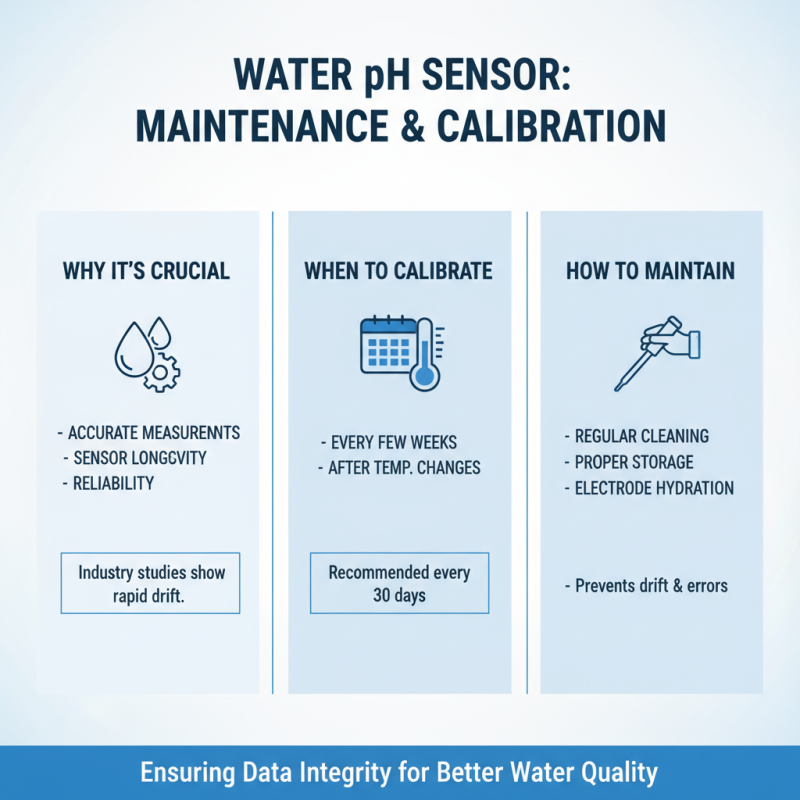
Maintaining and calibrating water pH sensors is crucial for accurate measurements. Regular maintenance helps ensure the longevity and reliability of your sensor. A common recommendation is to recalibrate your sensor every few weeks or after significant temperature changes. This frequency is backed by industry studies, which indicate that calibration drift can occur rapidly, with some sensors requiring adjustment every 30 days.
Cleaning the pH sensor is also vital. Contaminants can lead to inaccurate readings. Use distilled water or calibration solutions for cleaning. A study from the Environmental Protection Agency found that improper cleaning can result in errors of up to 0.5 pH units. Pay attention to contamination sources around your testing area.
**Tip:** Store your sensor in a proper solution when not in use. This small step can extend the lifespan of your sensor significantly. Also, be aware of the sensor's lifetime, usually around 1-3 years. If you notice fluctuating readings, it’s time for a replacement. Regular checks and thoughtful handling can lead to better data quality.
Cost Considerations and Budgeting for Water pH Sensors
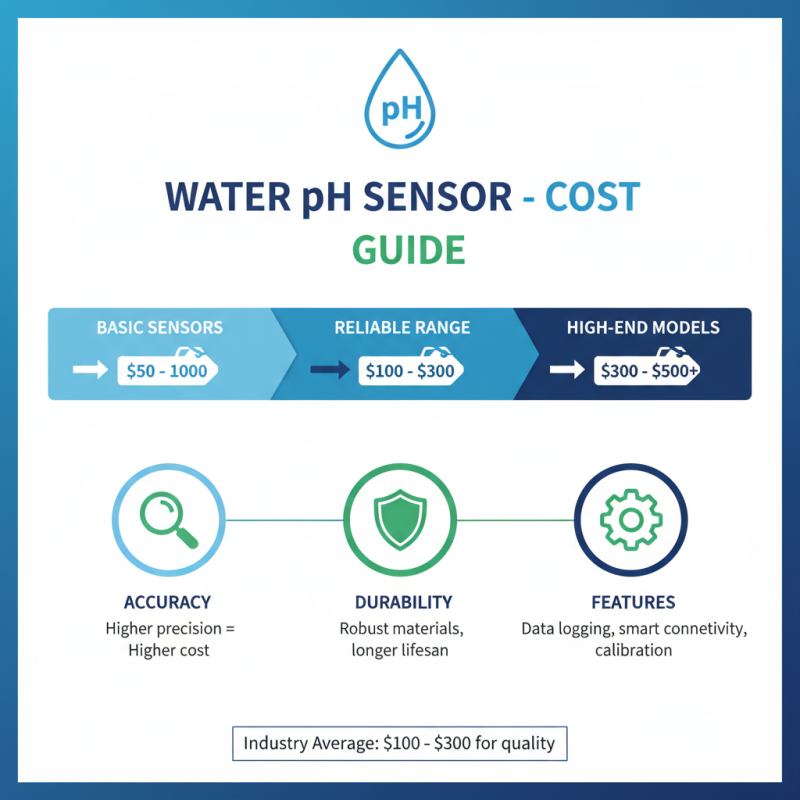
When choosing water pH sensors, cost is a significant factor. Prices vary widely based on accuracy, durability, and features. A basic sensor might start at $50, while high-end models can reach $500 or more. According to industry reports, the average price range for reliable pH sensors is between $100 and $300. This range often offers good quality without breaking the bank.
Budgeting for these sensors requires considering long-term needs. Regular calibration and maintenance are essential, adding to the overall expense. Some reports indicate that annual maintenance costs can reach up to 20% of the sensor's initial purchase price. Users should reflect on their water testing frequency to better gauge their budget.
Investing in a pH sensor is not just a one-time cost. Replacement sensors may be needed every few years. It is wise to factor this in when planning your budget. Ultimately, understanding your specific needs and considering the complete cost will lead to a more informed purchasing decision. Prioritize your requirements, and weigh those against your financial limits.





 Contact WhatsApp
 Contact Phone
 Contact Email