10 Essential Tips for Using a Pool Water Tester Effectively
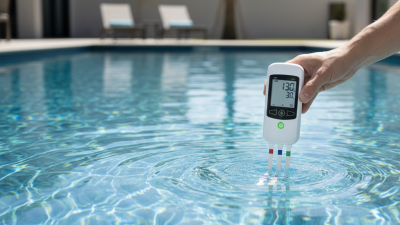
Using a Pool Water Tester is crucial for maintaining a safe and enjoyable swimming environment. Many pool owners underestimate its importance. Regular testing ensures that the water is balanced, protecting both swimmers and equipment. Pool Water Testers can efficiently measure pH levels, chlorine, alkalinity, and more. However, understanding how to use them effectively is key.
The results from a Pool Water Tester are only as good as the method used. Using incorrect techniques can lead to misleading information. A common mistake is not cleaning the tester properly before each use. This can affect the accuracy of the readings, causing frustration and extra costs. Paying attention to the instructions is essential for reliable outcomes.
Moreover, timing can change everything. Testing immediately after adding chemicals may not yield the best results. Allowing some time for chemicals to circulate is often overlooked. Experimenting with different methods can bring better insights. The right approach involves some trial and error, but ultimately leads to a more enjoyable swimming experience.
Understanding the Importance of Pool Water Testing for Maintenance
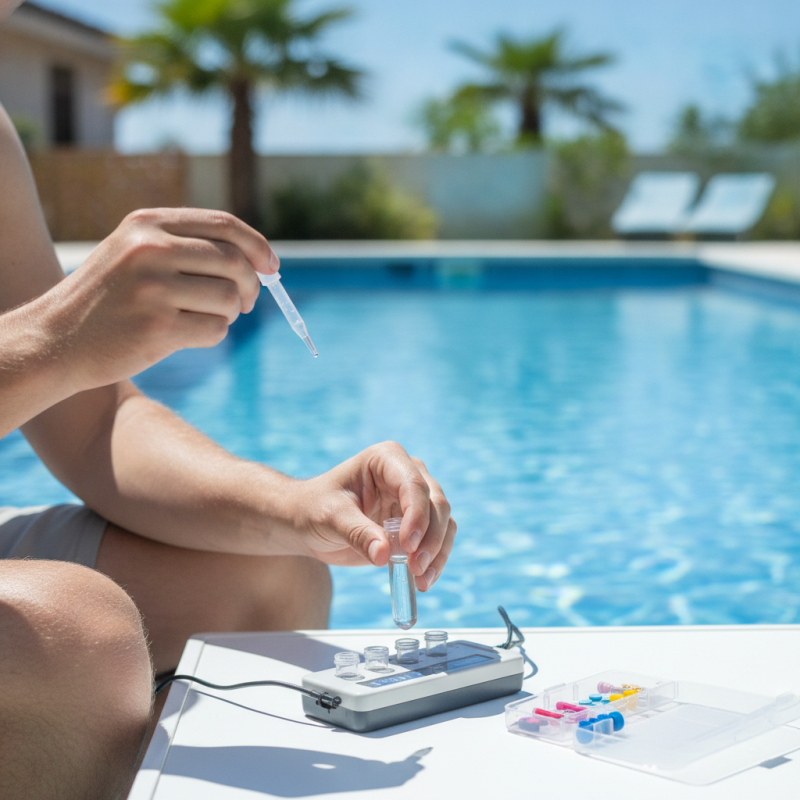
Maintaining a clean pool is essential for both safety and enjoyment. Pool water testing plays a crucial role in this process. Regular testing helps identify chemical imbalances. This can prevent algae growth and ensure water clarity. In addition, it protects swimmers from potential infections. Testing can feel overwhelming at times, especially with numerous chemical factors to monitor.
Understanding pH levels is vital. They affect chlorine efficiency and skin comfort. A pH that is too high or low can lead to various pool problems. Inexperience can lead to inaccurate readings. It's important to follow instructions carefully when using a water tester. Mistakes can occur, such as inadequate mixing of the sample. This can result in misleading results, affecting overall pool health.
Total alkalinity and chlorine levels are equally important. Low alkalinity can cause pH fluctuations, while proper chlorine levels keep the water safe. Neglecting these tests can lead to significant challenges. Regular testing and monitoring might feel tedious but are necessary for long-term maintenance. Consider keeping a log of your testing results to spot trends. Small adjustments can make a big difference.
pH Levels in Pool Water Testing
This chart displays the pH levels of pool water tested over a month to emphasize the importance of regular testing for maintaining optimal water quality.
Choosing the Right Pool Water Tester for Your Needs
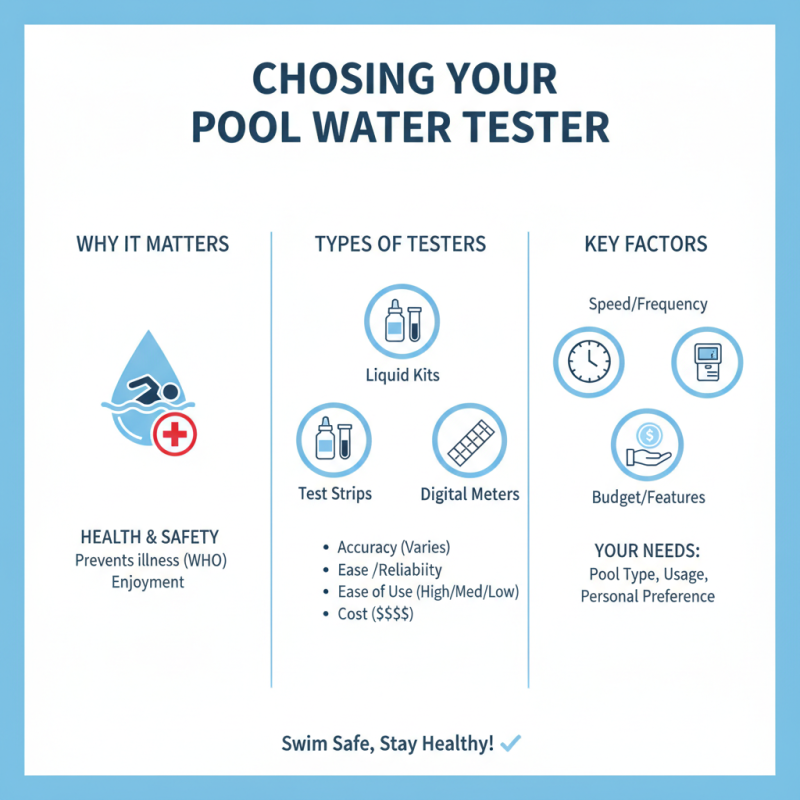
Choosing the right pool water tester is crucial for maintaining a safe swimming environment. After all, proper water chemistry can significantly affect your health and enjoyment. According to the World Health Organization, poorly maintained pool water can lead to various illnesses. Therefore, selecting an appropriate tester is essential.
Start with understanding your pool's specific needs. Different testers serve various purposes. For example, some examine pH levels, while others measure chlorine concentrations. If you're unsure, a multi-parameter tester can be a game-changer. It saves time and provides a comprehensive view of your pool water.
Tip: Regularly calibrate your tester according to manufacturer instructions. This ensures accuracy over time. Even the best testers can provide faulty readings if neglected. Additionally, consider testers that display results quickly. This feature can enhance your water maintenance routine.
Some testers are more user-friendly than others. Look for devices that feature clear instructions. Complex tools can lead to misunderstandings. Also, remember to check the battery life and replace it regularly. A drained battery can result in misleading readings, risking water quality.
Tip: Keep records of your test results. This data helps identify trends over time. You may notice patterns that inform your maintenance schedule. The right pool water tester, combined with diligence, creates a safer swimming environment.
Step-by-Step Guide to Collecting Water Samples for Testing
Collecting water samples for testing is critical for pool maintenance. Start by wearing clean gloves to avoid contamination. Ensure your hands and the sample container are free from any chemicals or oils. Use a clean, dry bottle for the water sample. According to the Pool & Hot Tub Alliance, a dirty container can lead to false test results, compromising water quality.
When sampling, choose a spot away from pool returns to avoid turbulence. Collect water from about 18 inches below the surface. This depth helps obtain an accurate reading of the water's chemistry. It's recommended to fill the bottle to the brim, as air gaps can alter test results. Properly label your sample with the date and time to track any changes accurately.
Testing frequency is also vital. An industry survey indicates that 30% of pool owners test their water only monthly. Regular monitoring can prevent issues like algae growth and pH imbalance. However, many people neglect to check water after heavy rainfall or swimming events. Consistency in testing is key to maintaining water health. Make it a habit to monitor your pool’s water regularly, and you will enjoy a cleaner, safer swimming environment.
10 Essential Tips for Using a Pool Water Tester Effectively
| Tip Number |
Tip Description |
Best Time to Test |
Recommended Frequency |
| 1 |
Always rinse the tester before use. |
Before every test |
Every time you test |
| 2 |
Collect samples at elbow depth (18 inches). |
Anytime |
Weekly |
| 3 |
Avoid testing after heavy rainfall. |
After rain |
Bi-weekly |
| 4 |
Use clean, dry containers for water samples. |
At all times |
Each test |
| 5 |
Read the tester instructions thoroughly. |
Before use |
Initial setup |
| 6 |
Calibrate tester regularly for accuracy. |
Monthly |
Monthly |
| 7 |
Record all test results for reference. |
Every test |
Each test |
| 8 |
Test water samples at the same time each day. |
Every day |
Daily |
| 9 |
Use a thermometer to check water temperature. |
Before testing |
Each test |
| 10 |
Consult a pool professional if needed. |
As required |
As needed |
Interpreting Test Results: Common Terms and Their Meanings
Using a pool water tester can seem confusing at times. Understanding common terms can significantly improve your experience. For example, "pH level" indicates how acidic or basic your pool water is. A balanced pH range is between 7.2 and 7.8. An unbalanced pH can lead to skin irritation and equipment corrosion.
Another key term is “chlorine level.” This refers to the amount of chlorine present to sanitize the water. Ideal free chlorine levels range from 1 to 3 parts per million (ppm). Too much chlorine can cause unpleasant odors and irritation. You might find that maintaining these levels is not as easy as it sounds.
"Alkalinity" is another critical factor. Total alkalinity helps stabilize pH levels. It ideally should be between 80 and 120 ppm. If you're not precise, fluctuations can occur. Hardness is another term you will encounter. This measures the calcium levels in your pool. Strive for a hardness of 200 to 400 ppm to avoid scaling. Each of these terms plays a vital role in pool maintenance. Regular testing and understanding these metrics are essential for clear, safe water.
Maintaining and Storing Your Pool Water Tester Efficiently
Proper storage of your pool water tester is vital for its longevity and accuracy. Keep the tester in a dry, cool place away from direct sunlight. Extreme temperatures can affect its performance. Regularly check for any damage, and replace worn-out parts to ensure reliability. Use a protective case to prevent physical harm. This step often gets overlooked, but it’s essential for maintaining its accuracy.
Cleaning your tester after each use is crucial. Rinse it with fresh water to remove any chemicals that may cause corrosion. Dry it thoroughly before storing it. Neglecting to clean your tester can lead to unreliable readings. Keeping a log of your testing sessions can also help track performance. Reflect on the data you gather and adjust your pool maintenance routine accordingly.
It’s easy to forget about the little things. Failure to store and maintain your tester properly could lead to costly mistakes. Take a moment to assess your current practices. Are you doing enough? Regular maintenance extends the life of your tester and can enhance the quality of your pool water. Stay proactive, and don't underestimate the importance of these simple tasks.





 Contact WhatsApp
 Contact Phone
 Contact Email