Top Tips for Choosing the Right Water Current Meter?
Choosing the right Water Current Meter can significantly impact your data collection accuracy. In industries like hydrology and environmental monitoring, precise measurements are crucial. According to a recent report by the Water Environment Federation, about 70% of hydrological studies rely on effective current measurement tools. This underscores the importance of selecting a meter that meets your specific needs.
Water Current Meters come in various types, each designed for different applications. Some are optimized for river flow measurements, while others excel in oceanographic studies. It's essential to understand your project’s requirements before making a choice. Common pitfalls include selecting a meter that is too large for small streams or underestimating the effects of turbulence.
Many users report frustration when their meters fail to provide reliable data. Such issues could stem from improper selection or inadequate calibration. It’s crucial to reflect on these aspects before investing in this essential tool. Take the time to evaluate your options and seek expert advice to ensure accurate and meaningful results.
Understanding Water Current Meter Types: Overview and Applications
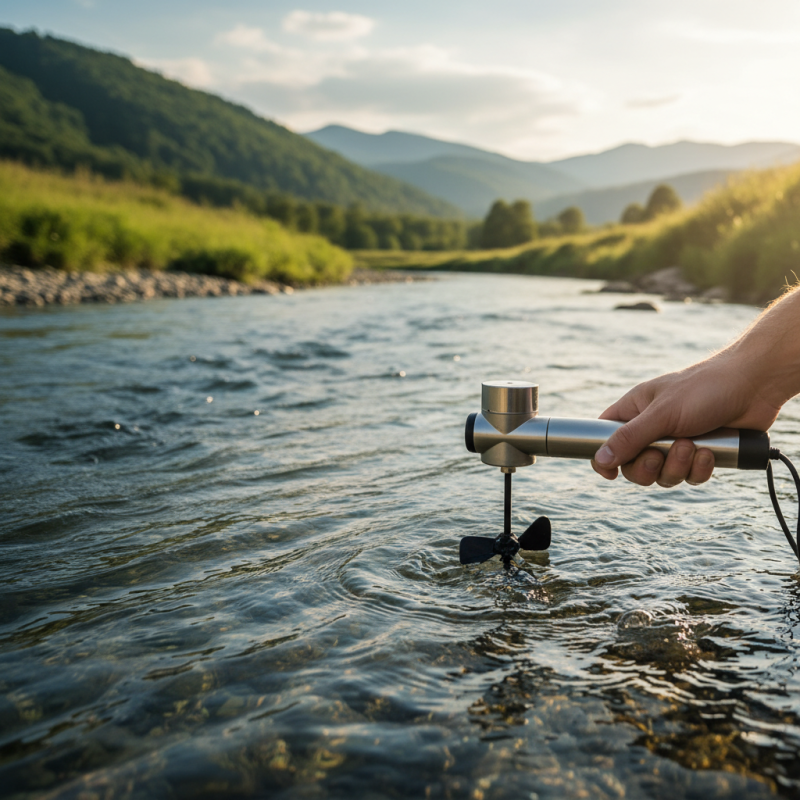
When selecting a water current meter, understanding its types is crucial. There are several options available, each suited for different applications. For example, electromagnetic current meters are excellent for measuring flow in large rivers, while acoustic meters work well in shallow waters. Knowing the environment can make a significant difference in your choice.
Tips: Consider the meter's maintenance requirements. Some devices require regular calibration, while others are more user-friendly. Be aware that cheaper meters might come with hidden costs. Durability is another factor to weigh. Harsh environments can damage sensitive equipment. Lightweight options may be convenient but could lack robustness.
Evaluate the intended use. A portable meter might be ideal for fieldwork, but does it provide accurate readings? Sometimes, you need to compromise between portability and precision. Look for models that offer adaptable features based on your needs. Every choice you make impacts the quality of your measurements. Reflecting on these aspects will lead to better decision-making.
Top Tips for Choosing the Right Water Current Meter
| Meter Type |
Description |
Applications |
Accuracy |
Price Range ($) |
| Electromagnetic |
Measures flow using electrical conductivity. |
Water treatment, irrigation, industrial processes. |
±1% to ±3% |
500 - 5000 |
| Mechanical |
Uses a rotating element to measure flow rate. |
Residential water supply, irrigation. |
±2% to ±5% |
100 - 2000 |
| Ultrasonic |
Uses sound waves to measure velocity of water. |
River flow measurement, tidal studies. |
±1% to ±2% |
300 - 7000 |
| Doppler |
Measures flow based on frequency shift of reflected sound. |
Wastewater treatment, environmental monitoring. |
±2% to ±5% |
400 - 6000 |
Key Factors to Consider: Accuracy, Range, and Sensitivity Specifications
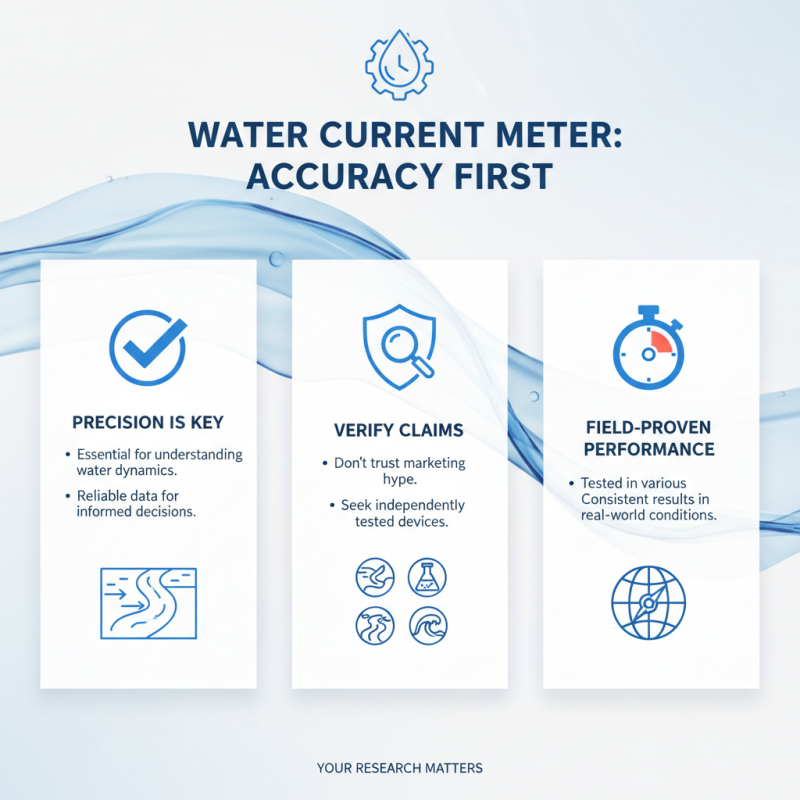
When selecting a water current meter, accuracy should be your top concern. Precise measurements are essential for understanding water dynamics. A device that claims high accuracy may still fall short in some conditions. It’s wise to look for meters tested in various environments. Ignore the marketing jargon that sounds appealing but offers little substance.
Next, consider range specifications. A water current meter that covers a broad range will be more versatile. However, check how it performs at different speeds. Some meters work well in calm waters but struggle in fast flows. This inconsistency can skew your data, leading to incorrect conclusions. Measure the environment where you’ll use the meter.
Finally, think about sensitivity. A highly sensitive meter can detect small changes in the current. Yet, overly sensitive devices may react to minor disturbances that do not represent true water flow. Finding the right balance can be challenging. Review the specifications closely and choose wisely. The right meter should meet your specific needs while remaining reliable in practical situations.
Selecting the Right Sensor Technology: Electromagnetic vs. Acoustic Choices
When selecting a water current meter, choosing the right sensor technology is crucial. Two commonly used types are electromagnetic and acoustic sensors.
Electromagnetic sensors measure velocity by detecting induced voltage in a conductive fluid. They excel in various conditions, including dirty water. However, they can be expensive and require careful calibration.
Acoustic sensors use sound waves to measure flow speed. These sensors are often more versatile. They perform well in turbulent waters, but their accuracy can decrease with high sediment levels. It’s essential to weigh the specific conditions of your environment before making a choice.
Tip: Assess the conductivity of your water. If it's low, electromagnetic sensors might struggle.
Tip: Consider the sediment levels. High sediment may push you toward acoustic sensors for reliable readings.
Ultimately, the right choice depends on your specific needs and conditions. Reflect on your environment and expected flow scenarios. This helps in finding the right fit for your measurement tasks.
Analyzing Environmental Conditions: Impact on Meter Performance and Longevity
When selecting a water current meter, environmental conditions play a significant role in its performance. Factors such as temperature, salinity, and sediment type can influence readings. For instance, high sediment levels may clog sensors, leading to inaccurate data. It's crucial to bear this in mind when choosing a meter for turbulent rivers versus calm lakes.
Consider the effects of temperature. A meter may function perfectly at one temperature range but fail outside of it. Harsh weather conditions, like freezing temperatures, can also affect the longevity of the device. Users should always check operational limits specified by manufacturers. However, it’s common to overlook these aspects in the excitement of purchase.
Ultimately, understanding your environment is key. Take time to assess your specific conditions before making a decision. A great meter for one scenario may not perform well in another. Reflection on past experiences can guide future choices. Avoid rushing into a purchase; an informed decision can significantly impact measurement accuracy.
Impact of Environmental Conditions on Water Current Meter Performance
Budgeting for a Water Current Meter: Cost vs. Quality Considerations
When budgeting for a water current meter, it's essential to balance cost and quality. Reports indicate that high-quality meters can range from $1,000 to $5,000. These prices often reflect advanced features, like high precision and durability. Cheaper options may save money upfront but can fail over time. This can lead to more frequent replacements and long-term costs.
It's also crucial to consider calibration and maintenance costs. A top-tier meter might require less maintenance, saving money in the long run. Some affordable models might need frequent recalibration, which adds to expenses. Understanding the total lifetime cost rather than just the initial price is vital.
Data shows that users often underestimate the importance of measurement accuracy. A loss of precision can lead to flawed data, impacting studies or projects. Investing in a reliable meter is sometimes overlooked, leading to regret later. Every dollar spent on quality could save you from costly errors. Reflect on your budget and evaluate the true costs of compromised quality.





 Contact WhatsApp
 Contact Phone
 Contact Email