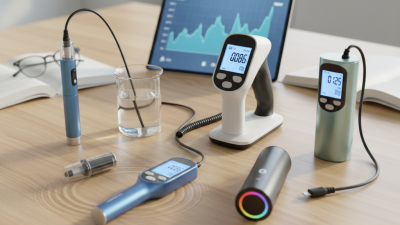
What Are the Top Types of Water pH Sensors?
Choosing among Water Ph Sensors is not a simple matter of comparing prices or advertised accuracy. Water quality changes with temperature, dissolved minerals, pressure, flow, and contamination. A sensor that performs well in a calm laboratory beaker may struggle inside a wastewater pipeline.
Dr. Arnold O. Beckman, a pioneer of electronic measurement, stated, “The purpose of science is to discover and illuminate the truth.” That principle remains important when evaluating pH instruments. A reliable reading depends on the sensor, calibration method, installation, and maintenance routine—not the display alone.
This guide examines the main types of Water Ph Sensors, including glass electrode, combination, ISFET, optical, and industrial inline models. Each design has practical strengths and weaknesses. Glass electrodes usually provide dependable accuracy, but their fragile bulbs require careful handling. ISFET sensors resist breakage, yet their performance may vary in difficult chemical environments. Optical systems can reduce routine maintenance, although their higher cost may limit adoption.
Small details matter.
For example, residue on a probe junction can create unstable readings during continuous monitoring. Temperature compensation may correct part of the error, but it cannot repair poor calibration. I have seen measurements improve simply after cleaning the electrode and replacing old buffer solution. Still, that experience should not become a universal rule. Application conditions differ, and no sensor is perfect.
Understanding these differences helps laboratories, treatment facilities, aquaculture operators, and process engineers select a pH sensor with greater confidence.
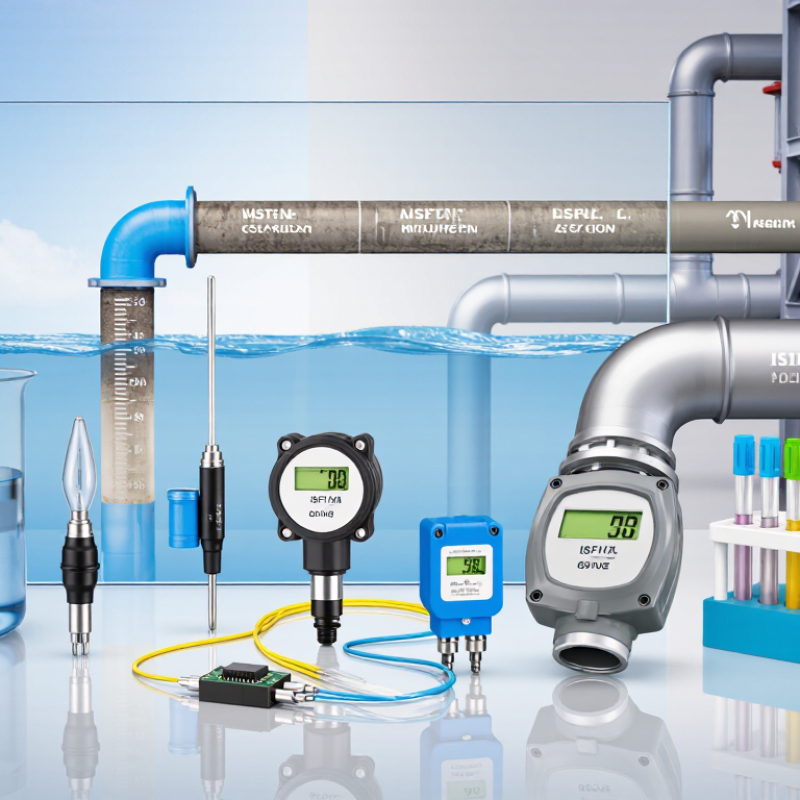
What Is a Water pH Sensor and How Does It Work?
A water pH sensor measures how acidic or alkaline a sample is. Most field meters use a glass electrode paired with a reference electrode. A thin, hydrated glass membrane responds to hydrogen-ion activity, creating a voltage the meter converts into a pH reading. Before testing, technicians commonly calibrate the probe with standard buffer solutions, such as pH 4, 7, and 10. Temperature compensation adjusts the electrode’s response; it does not correct changes in the sample itself. That distinction matters.
Some installations use solid-state ISFET sensors, which detect changes in electrical potential at a sensitive surface. They avoid a fragile glass bulb, but still need careful calibration and maintenance. The USGS explains that pH is logarithmic: a one-unit change represents a tenfold change in acidity. Small shifts count. The U.S. EPA’s National Secondary Drinking Water Regulations list pH 6.5–8.5 as a non-enforceable guideline for drinking water. This range is useful context, not proof that a single reading tells the whole story. Dirty probes, temperature changes, and poor calibration can all distort results. A clean sensor helps, but field conditions are rarely perfect.
What Are the Top Types of Water pH Sensors?
Water pH sensors commonly use glass electrodes, ISFET technology, optical indicators, or antimony electrodes. The chart compares typical pH operating ranges for these sensor types.
A glass electrode measures pH through a voltage difference across a specialized glass membrane and remains the most widely used method. ISFET sensors detect changes in surface charge without a fragile glass bulb, while optical sensors estimate pH through color changes in a chemical indicator. Antimony electrodes are durable alternatives for some harsh-water applications. Actual ranges depend on sensor construction, calibration, temperature, and water chemistry.
What Are the Features of ISFET Water pH Sensors?
Water pH sensors come in several forms, including glass-electrode, ISFET, differential, and combination probes. For demanding field work, ISFET water pH sensors deserve close attention. Their solid-state sensing element replaces fragile glass. This design can reduce breakage risks in tanks, pipes, and portable meters. It also supports compact probe construction and quick electrical response. No glass bulb means fewer worries during routine handling.
An ISFET sensor measures changes at a chemically sensitive transistor surface. It usually needs a reference electrode, stable electronics, and temperature compensation for dependable readings. In practice, operators should calibrate with fresh buffer solutions and rinse between samples. A clogged or biofouled surface can distort pH values, even when the display appears stable. Response time is often useful for process monitoring, but installation conditions still matter. Air bubbles, poor grounding, and fluctuating temperatures can produce confusing results. The sensor is rugged, not magically maintenance-free.
ISFET probes are valuable where vibration, cleaning, or limited space makes glass sensors inconvenient. Their small size can fit narrow flow cells and automated sampling lines. They also offer good repeatability when the reference system remains healthy. However, long-term drift, reference aging, and surface contamination require scheduled checks. I would not approve a sensor from specifications alone. Compare calibration records, temperature range, cleaning requirements, and performance in the actual water matrix. A short trial often reveals more than a brochure.
How Do Differential and Combination pH Sensors Differ?
Differential and combination pH sensors both measure acidity, but their designs suit different water conditions. A combination sensor places the glass measuring electrode and reference electrode inside one compact body. It is convenient for laboratories, tanks, and relatively clean process water. Installation is simple. Maintenance is usually straightforward.
A differential pH sensor separates the measuring and reference functions. The measuring electrode responds to hydrogen-ion activity, while a separate reference electrode provides a stable comparison point. This arrangement can perform better in wastewater, high-pressure lines, or samples containing suspended solids. The reference chamber is less exposed to direct contamination. However, the system needs more space, careful wiring, and compatible components. It may also require more technical skill during calibration. No sensor is perfect. A differential design can still drift when its reference junction becomes blocked.
Tips: Match the sensor to the sample, not only the price. Check temperature, pressure, conductivity, and suspended solids before choosing. For combination sensors, inspect the junction regularly and keep the glass bulb hydrated during storage. Use fresh buffer solutions and calibrate near the expected operating range. A two-point calibration is common, but some applications need three points. Record slope and offset values. Unusual readings deserve investigation; replacing the sensor immediately may hide a grounding problem, air bubbles, or poor flow. Small details matter.
Which Water pH Sensor Type Fits Different Applications?
Choosing a water pH sensor depends on chemistry, temperature, maintenance, and response time. A glass-electrode sensor suits laboratories and routine drinking-water checks because it offers strong accuracy across common pH ranges. The United States Environmental Protection Agency lists 6.5–8.5 as the secondary standard range for drinking-water pH. Small errors matter near these limits.
For continuous treatment systems, a combination glass sensor with automatic temperature compensation is usually practical. It works well in tanks, pipelines, and filtration skids, but fouling can weaken readings. Wastewater with suspended solids needs a rugged differential sensor, especially when reference contamination is likely. Keep the junction accessible. Cleaning schedules should match the water, not a fixed calendar.
Semiconductor ISFET sensors fit compact instruments and fast-moving field tests. They resist breakage and start quickly, although temperature drift and coating effects still require verification. Optical sensors can help in harsh or low-maintenance environments, yet their chemistry-specific calibration may limit flexibility.
The International Organization for Standardization describes standardized pH measurement procedures in ISO 10523:2012, including calibration and temperature control. The World Health Organization also identifies pH as an important operational parameter, commonly managed around 6.5–8.5. These figures guide selection, but they do not replace site trials. A sensor that performs well in clean water may fail beside an aeration basin. That is easy to underestimate.





 Contact WhatsApp
 Contact Phone
 Contact Email