What is a Turbidity Sensor and How Does it Work?
Turbidity Sensors play a crucial role in monitoring water quality. These devices measure the clarity of water by detecting suspended particles. According to industry reports, waterborne diseases affect millions annually. Turbidity is a key indicator of contamination.
In municipal water systems, high turbidity levels can pose serious health risks. In fact, studies show that turbidity can reduce disinfection effectiveness. The need for reliable Turbidity Sensors is growing in various sectors, including aquaculture and wastewater treatment. These sensors help ensure compliance with environmental regulations.
Despite advancements, challenges remain. The accuracy of turbidity readings can fluctuate with changing conditions. Regular calibration is essential for maintaining sensor reliability. Investing in quality sensors is crucial for effective monitoring. These devices are not infallible; they still require human oversight and periodic checks.
What is a Turbidity Sensor?
A turbidity sensor measures the cloudiness of a liquid. This measurement is crucial for assessing water quality. Turbidity comes from particles suspended in water. It is important in various industries, including environmental monitoring, water treatment, and food processing.
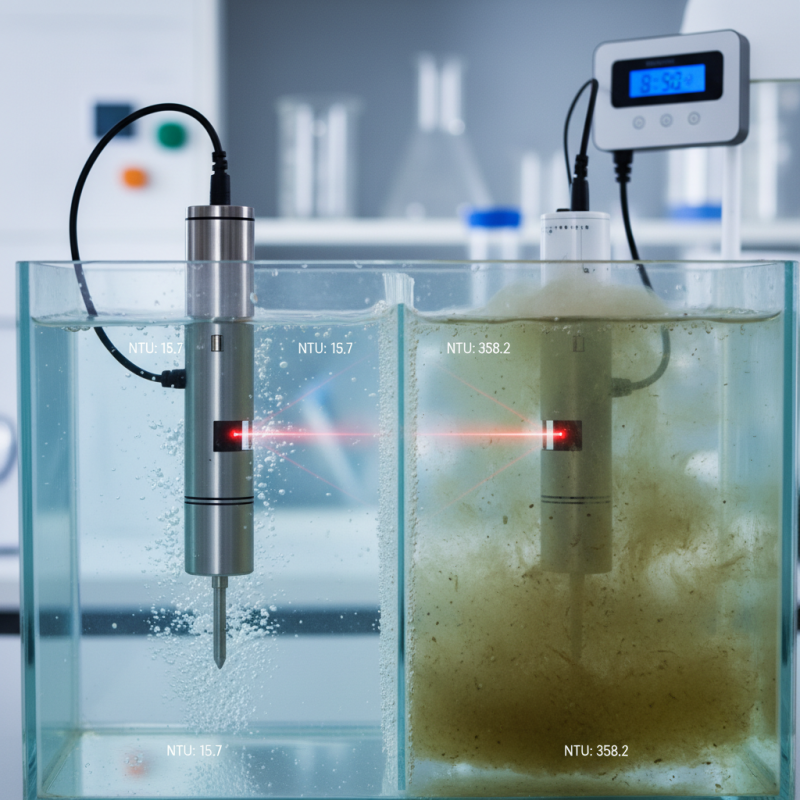
These sensors often utilize a light source, often a laser, to detect the amount of light scattered by particles in the water. The more particles present, the higher the turbidity level. According to industry reports, turbidity levels are usually measured in nephelometric turbidity units (NTU). For drinking water, a turbidity level under 1 NTU is acceptable. Yet, many sensors struggle to deliver consistent results in changing conditions.
Data shows that turbidity can threaten aquatic life. High levels can reduce light penetration, affecting photosynthesis. Turbidity impacts water treatment efficiency also. Sometimes, sensors can get clogged and provide inaccurate readings. Regular calibration and maintenance are crucial. Neglecting these can lead to serious errors. Not all sensors react well to varying temperatures or chemical compositions. A deeper understanding of these limitations is necessary for effective use.
Principle of Operation for Turbidity Sensors
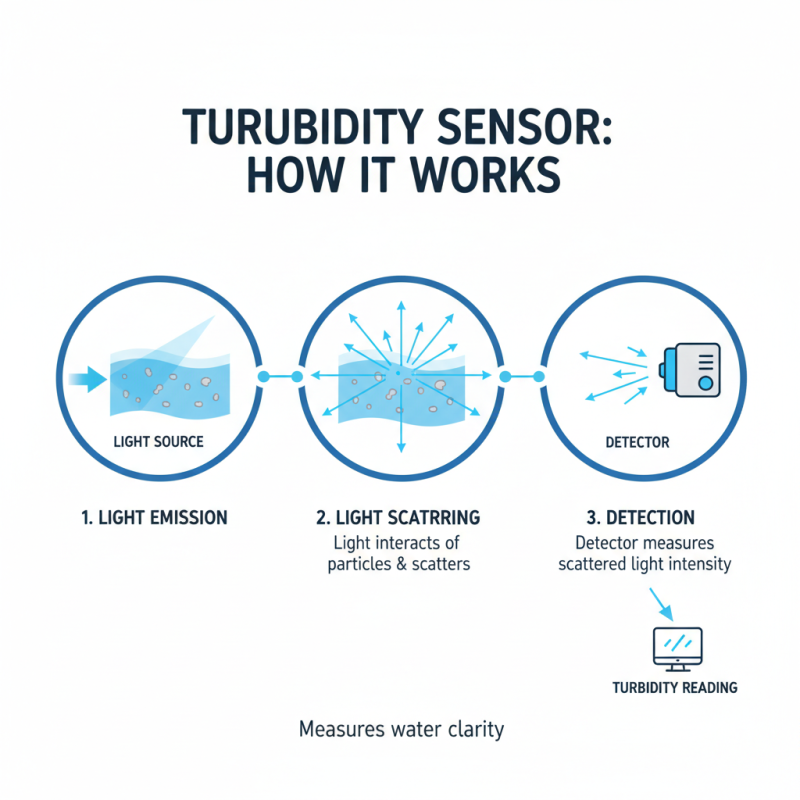
Turbidity sensors measure water clarity by detecting suspended particles. Their operation hinges on the principle of light scattering. A light source emits a beam into the water sample. As this light interacts with particles, some gets scattered. A detector then measures the intensity of this scattered light.
Typically, turbidity levels are expressed in NTU (Nephelometric Turbidity Units). According to industry reports, clean water typically registers below 5 NTU. In contrast, water with high turbidity can exceed 100 NTU. This distinction is crucial for various applications, including drinking water safety and wastewater treatment.
Yet, not all turbidity sensors provide consistent readings. Factors like temperature and particle composition can skew results. Regular calibration and maintenance are essential for accuracy. Users often overlook these aspects, leading to potential judgment errors in quality assessments. Although turbidity sensors are invaluable tools, reliance on them must be tempered with an understanding of their limitations.
Components of a Turbidity Sensor
A turbidity sensor is an essential tool for measuring the clarity of water. Its main components work together to provide accurate readings. The sensor typically includes a light source, such as an LED, and a detector. The light source illuminates the water sample. When the light hits suspended particles, it scatters. The detector measures this scattered light.
The light source needs careful positioning. It should be stable to ensure consistent readings. If not aligned properly, results may vary significantly. The detector also plays a crucial role. It must be sensitive enough to detect low levels of turbidity. However, sensitivity can sometimes lead to false readings if not calibrated correctly.
These components connect to a processing unit. This unit interprets data and displays it. The design of a turbidity sensor can vary. Some sensors may use additional filters or lenses. These can enhance performance, but they introduce complexity. Users often need to reflect on the conditions required for accurate measurement. Environmental factors may also affect how well a turbidity sensor functions.
Applications of Turbidity Sensors in Different Industries
Turbidity sensors play a vital role across various industries. In water treatment facilities, they measure the clarity of water. High turbidity levels indicate the presence of suspended particles. This can affect the effectiveness of disinfection processes. In such cases, real-time monitoring is crucial.
In the food and beverage industry, these sensors ensure quality control. They help maintain product consistency by monitoring liquid clarity in production lines. A slight increase in turbidity might signal contamination. This could lead to costly recalls or health risks, which is a serious concern.
Environmental monitoring is another significant area. These sensors track water quality in rivers and lakes. Changes in turbidity can point to pollution or sediment activities. However, sensors are not flawless. Calibration errors and environmental disturbances can affect readings. Regular maintenance and accurate data interpretation are essential to address these challenges.
Factors Affecting Turbidity Sensor Readings
Turbidity sensors measure the clarity of water. Several factors can impact their readings. One key factor is the presence of suspended particles. These particles can include dirt, algae, and microorganisms. When measuring turbidity, the concentration of these particles is crucial. High concentrations lead to higher turbidity values, indicating less clarity. Research shows that turbidity levels can influence aquatic life. A study found that fish populations decline significantly in water with high turbidity.
Another factor is temperature. As water temperature rises, the solubility of oxygen decreases. Warmer water may contain more organisms and organic matter. This can lead to elevated turbidity readings. Additionally, pH levels can affect the behavior of particles in water. A neutral pH usually means more stable readings. However, extreme pH can cause particles to clump, resulting in inconsistent readings.
**Tips:** Regular maintenance of turbidity sensors is vital. Clean the sensors to ensure accuracy. Monitor environmental conditions that may affect readings. The placement of the sensor matters too; avoid areas with heavy sedimentation. Understanding these factors enhances data accuracy and reliability.
Turbidity Sensor Readings Across Different Water Sources
The following bar chart illustrates the turbidity levels measured in various water sources. Turbidity is affected by factors such as sediment concentration, phytoplankton, and organic material. The data represents average turbidity readings (in NTU) taken from different locations.





 Contact WhatsApp
 Contact Phone
 Contact Email