How to Use a Conductivity Meter for Accurate Measurements?
In the world of measurement technologies, the conductivity meter plays a crucial role. Dr. Emily Harper, an expert in environmental science, once said, "A conductivity meter is essential for understanding water quality." This statement highlights the importance of accurate measurements in assessing various solutions.
Using a conductivity meter can seem daunting. Achieving precise readings requires attention to detail. One must carefully calibrate the meter before each use. Neglecting this step can lead to misleading results. Additionally, the temperature of the solution can significantly influence conductivity. Users should be aware of this variable.
Regular maintenance of the conductivity meter is vital. Cleaning the probe is often overlooked but essential for reliable outcomes. Some users may rush through this process, resulting in inaccuracies. As we strive for exact measurements, it is crucial to reflect on these practices. Making small adjustments can greatly enhance the reliability of conductivity tests.

Understanding Conductivity Meters and Their Importance
Understanding conductivity meters is essential for accurate measurements in various fields. These meters assess a solution’s ability to conduct electricity, which reflects the concentration of ions present. This makes them invaluable in water quality testing and laboratory research.
When using a conductivity meter, calibration is crucial. An uncalibrated meter can lead to erroneous results. Regularly check the calibration against known standards. The meter should be rinsed with distilled water before each measurement. This simple step prevents cross-contamination and ensures your results are reliable.
It's also vital to consider temperature effects. Conductivity readings can change with temperature fluctuations. Some meters automatically adjust for this, but not all do. Always note the temperature during your testing. Many users overlook this detail, leading to misleading conclusions. Attention to detail is key. The right practices will enhance your accuracy and effectiveness in measurements.
Preparing Your Conductivity Meter for Use
When preparing your conductivity meter for use, ensure you first check its calibration. A well-calibrated meter provides reliable readings. Calibration typically requires standard solutions with known conductivity values. Follow the instructions closely; this is critical for accuracy.
Next, clean the electrodes. Dirty electrodes can alter your measurements. Rinse them with distilled water to eliminate any residues. This step is often overlooked, but it is essential. Even small contaminants can lead to significant errors.
Lastly, take a moment to inspect the meter's battery level. A low battery may affect its performance. Consider the environmental conditions, too. Temperature and salinity can influence readings. Being aware of these factors will help you achieve better measurements.
Steps to Calibrate Your Conductivity Meter Accurately
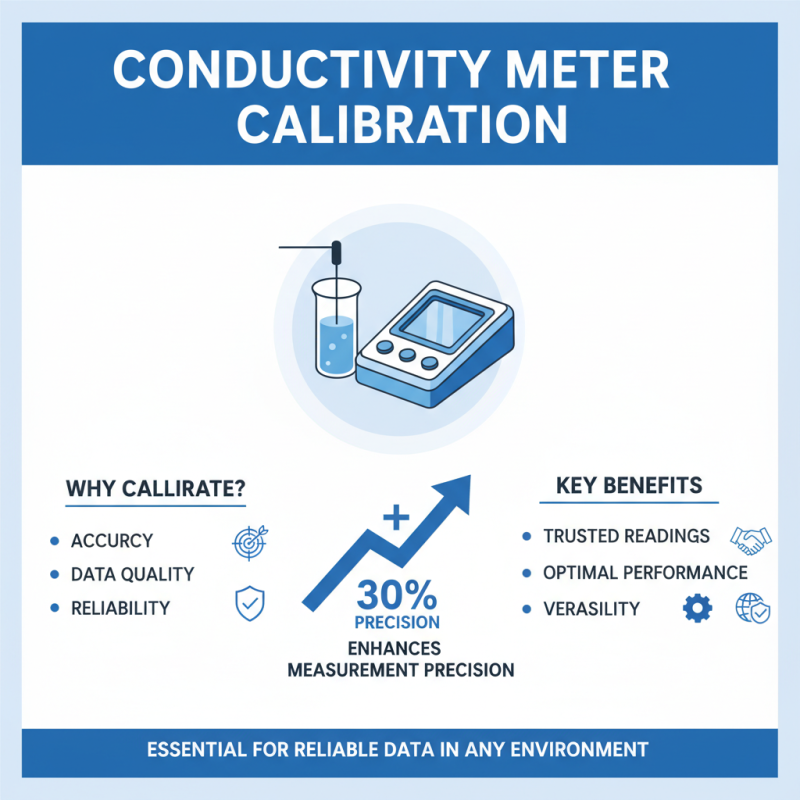
Calibrating a conductivity meter is essential for obtaining accurate measurements. Proper calibration can significantly improve the quality of your data. According to industry studies, accurate calibration can enhance measurement precision by up to 30%. It ensures that the meter gives reliable readings in various environments.
Begin by selecting a standard solution with known conductivity. Solutions of 1413 µS/cm and 12,880 µS/cm are common. Make sure your meter is clean and properly maintained. Immerse the probe in the standard solution and allow it to stabilize. Adjust the reading to match the solution's conductivity. This step is crucial for valid results.
After calibration, check the meter's accuracy with a secondary standard. Regular checks help identify drift in measurements. Neglecting this step can lead to significant errors. Studies suggest that many users overlook this vital process, leading to discrepancies. Therefore, it's important to reflect on your calibration routine. Regular adjustments can dramatically enhance the reliability of your conductivity measurements.
Techniques for Taking Precise Conductivity Measurements
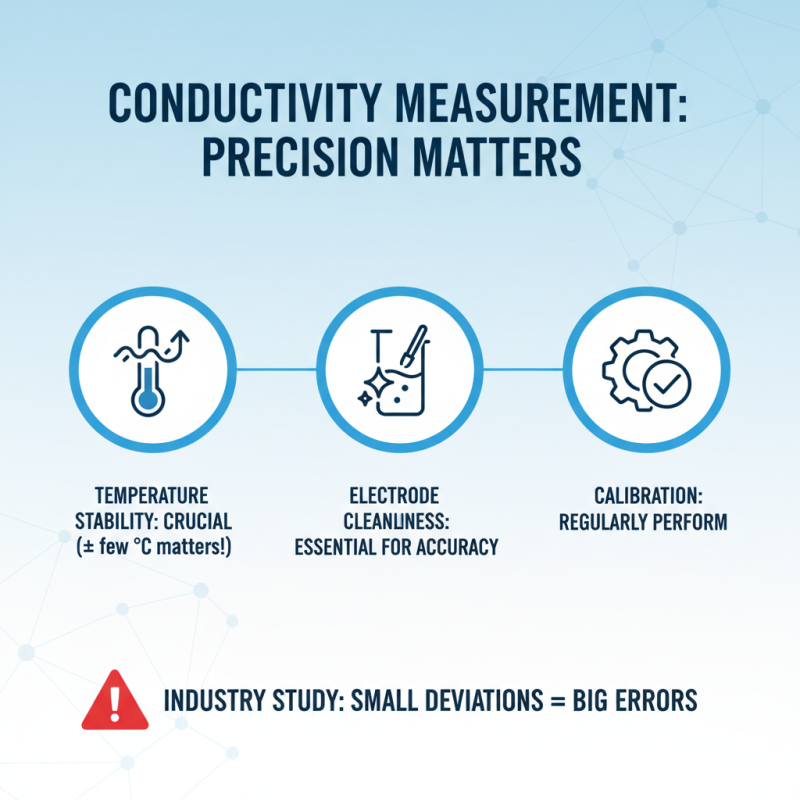
When taking conductivity measurements, precision is key. The accuracy of your readings can be affected by several factors including temperature, electrode cleanliness, and calibration. Industry studies highlight that deviations of just a few degrees Celsius can impact results significantly. Hence, maintaining a stable temperature during measurement is crucial.
Tips: Always calibrate your conductivity meter before use. Calibration should be done with a standard solution that closely matches the expected sample. A meticulous approach to cleaning electrodes can prevent contamination, which often leads to erroneous readings.
Another aspect to consider is the sample's total dissolved solids (TDS). Higher TDS can result in non-linear conductivity readings. According to recent reports, it’s advised to dilute samples with high TDS to improve accuracy. However, dilution may also introduce errors, necessitating careful adjustments.
Tips: Measure multiple samples for consistency. If readings show significant variation, re-evaluate sample handling and electrode condition. Reflection on methodologies enhances the overall reliability of your measurements. Be open to adjusting techniques as needed.
Troubleshooting Common Issues with Conductivity Meters
Using a conductivity meter can yield accurate results, but troubleshooting common issues is essential. One frequent problem is erratic readings. This can occur due to dirty electrodes. Clean the probes with a soft cloth or appropriate cleaning solution. Ensure no residue is left.
Another common issue is temperature variations. Conductivity readings fluctuate with temperature changes. If the meter is not temperature-compensated, consider using a temperature probe. This ensures more reliable measurements. Also, always calibrate your meter according to the manufacturer’s guidelines.
Sometimes, you may notice unstable readings even after calibration. This can be frustrating. Check the battery level. A low battery can cause fluctuations in the readings. If multiple attempts fail, consider seeking professional calibration services. Regular maintenance is crucial for accurate measurements over time.





 Contact WhatsApp
 Contact Phone
 Contact Email