What is a Water Quality Monitor and How Does it Work?
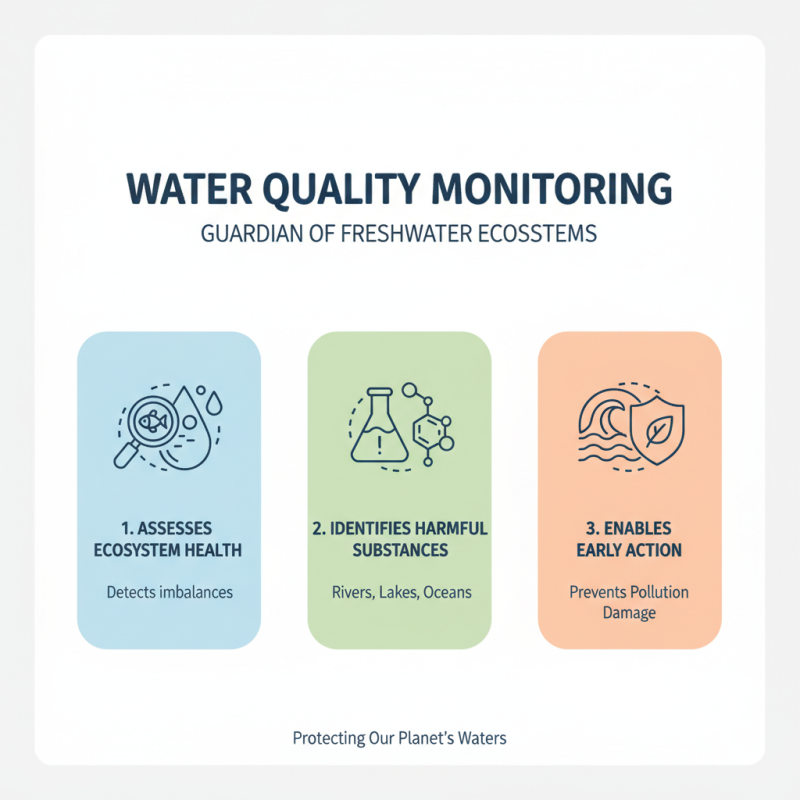
In today’s world, ensuring clean water is vital. Experts emphasize the importance of monitoring our water sources. Dr. Emily Carter, a renowned water quality specialist, states, "A Water Quality Monitor is essential for detecting pollutants early." This underscores the urgent need for technology that safeguards our health.
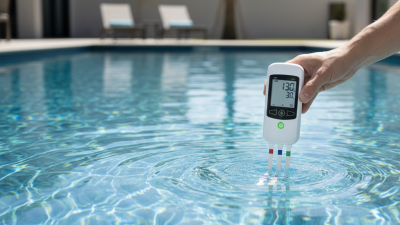
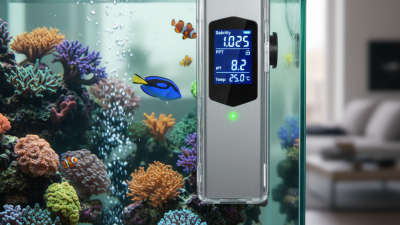
A Water Quality Monitor is a sophisticated device. It measures various parameters, including pH, turbidity, and contaminants. Many tools exist, yet not all provide accurate results. Users must choose wisely to ensure reliable data. Routine checks are crucial; however, some people overlook them, thinking all water is safe.
Understanding how a Water Quality Monitor operates is key. It uses sensors to analyze water samples in real-time. This technology can raise awareness but has limitations. Not every monitor detects all types of pollutants. Therefore, a deeper understanding and periodic recalibration are necessary. By making informed choices, we can better protect our crucial water resources.
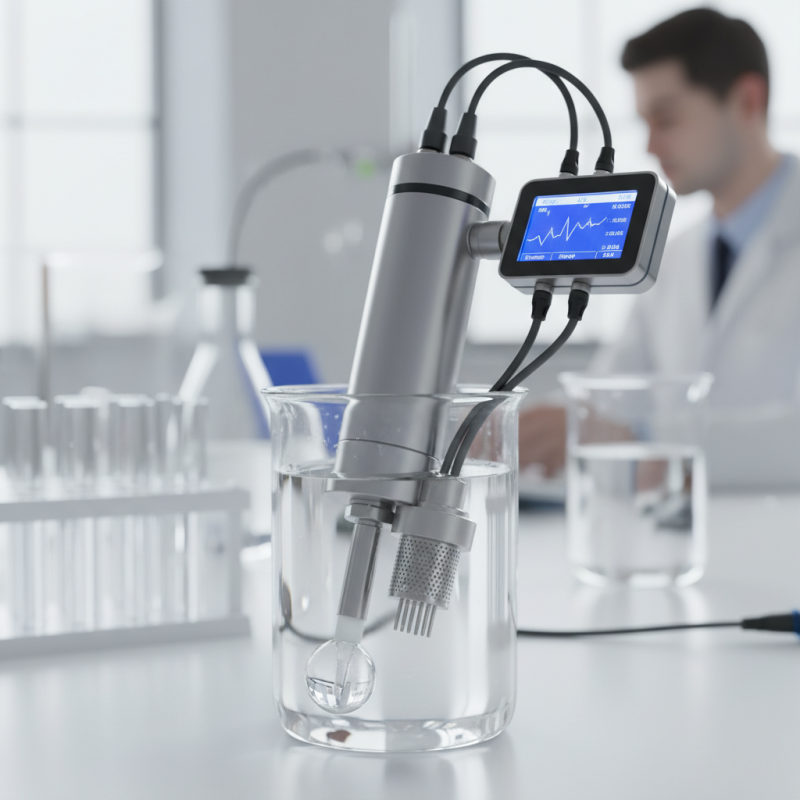
What is a Water Quality Monitor?
Water quality monitors are essential tools for assessing the health of aquatic environments. These devices provide real-time data on various water parameters. Key metrics include pH levels, turbidity, dissolved oxygen, and temperature. According to a report by the World Health Organization, poor water quality affects over 2 billion people globally. Such alarming statistics highlight the need for effective monitoring.
Typically, these monitors operate using sensors that detect chemical and physical changes in water. For instance, a sensor can analyze pH changes triggered by pollutants. The data collected helps identify pollution sources and trends. Yet, many devices may struggle to provide consistent readings in fluctuating conditions. Variation due to temperature and organic matter can lead to inaccuracies. Continuous calibration and maintenance are crucial for reliable results.
In urban areas, water quality monitoring systems often fall short. A study by the U.S. Environmental Protection Agency noted that nearly 40% of rivers and lakes are not monitored regularly. This lack of oversight means potential threats may go undetected. It is clear that while technology offers solutions, the implementation still faces significant challenges. Regular assessments and upgrades are necessary to improve the effectiveness of water quality monitors.
Key Components of Water Quality Monitors
Water quality monitors are essential tools for measuring the health of water bodies. Understanding their key components helps us appreciate their function. The first major part is the sensors. These sensors detect various parameters like pH, turbidity, and dissolved oxygen. Each sensor plays a critical role in monitoring specific water conditions. Sensors can be vulnerable to contamination. Regular calibration is necessary to ensure accurate readings.
Another important component is the data logger. This device collects and stores information from the sensors. It allows users to track changes over time. Modern data loggers can connect to software for deep analysis. However, not all data loggers are user-friendly. Some require extensive training to utilize effectively.
The power supply is equally important. Monitors can operate on batteries or solar energy. A reliable power source ensures continuous monitoring. However, issues can arise if the power supply fails. Each component of the water quality monitor has its challenges. Understanding these two critical areas helps in troubleshooting and optimizing the system.
Water Quality Monitor Data Overview
This chart displays typical water quality measurements monitored in various bodies of water. The parameters include pH level, dissolved oxygen content, turbidity, nitrate, and phosphate concentrations. These measurements are crucial for assessing the health of aquatic ecosystems.
How Water Quality Monitors Measure Parameters
Water quality monitors are vital tools in environmental management. They assess various parameters of water to ensure its safety and purity. These devices measure factors such as pH, turbidity, dissolved oxygen, and temperature. Each parameter provides insight into the water's condition and usability for various purposes, from drinking to recreation.
Water quality monitors typically use sensors to detect changes in water chemistry. For instance, pH probes gauge acidity or alkalinity. Turbidity sensors measure cloudiness, indicating particles in the water. Dissolved oxygen sensors determine how much oxygen is available for aquatic life. These measurements occur continuously or at set intervals, helping identify trends over time.
However, not all monitors are perfect. Some may require regular calibration, and results can vary based on external conditions. Factors like temperature fluctuations or sensor wear can affect accuracy. Users must regularly maintain and validate these tools. Understanding their limitations is essential for effective water management.
Data Interpretation and Analysis Methods
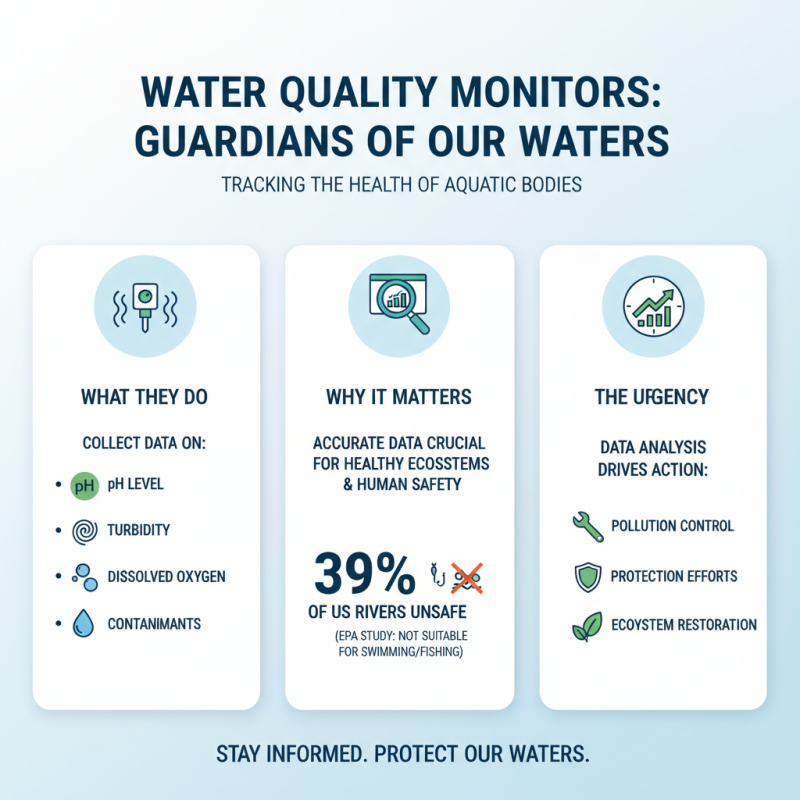
Water quality monitors play a vital role in tracking the health of our water bodies. These devices collect data on various parameters like pH, turbidity, dissolved oxygen, and contaminants. Accurate data interpretation is crucial. For instance, a study from the Environmental Protection Agency shows that 39% of rivers and streams in the U.S. are not safe for swimming or fishing, highlighting the urgency in data analysis.
Data analysis methods vary widely. Real-time data streaming helps in making quick decisions. Statistical tools like regression analysis reveal trends over time. However, these tools can miss nuances. For example, while turbidity readings may indicate pollution, they may not reveal specific sources. This gap in data can lead to misinformed remediation strategies.
In some cases, data visualization tools can help. Maps and graphs make complex data easier to digest. Yet, the risk lies in oversimplifying. Not all viewers may understand the implications of the visualized data. Diverging context can mislead stakeholders. Accurate communication of findings is essential for effective water management efforts.





 Contact WhatsApp
 Contact Phone
 Contact Email