






Chlorophyll Water Quality Sensors: "Technological Sentinels" Guarding Water Environments
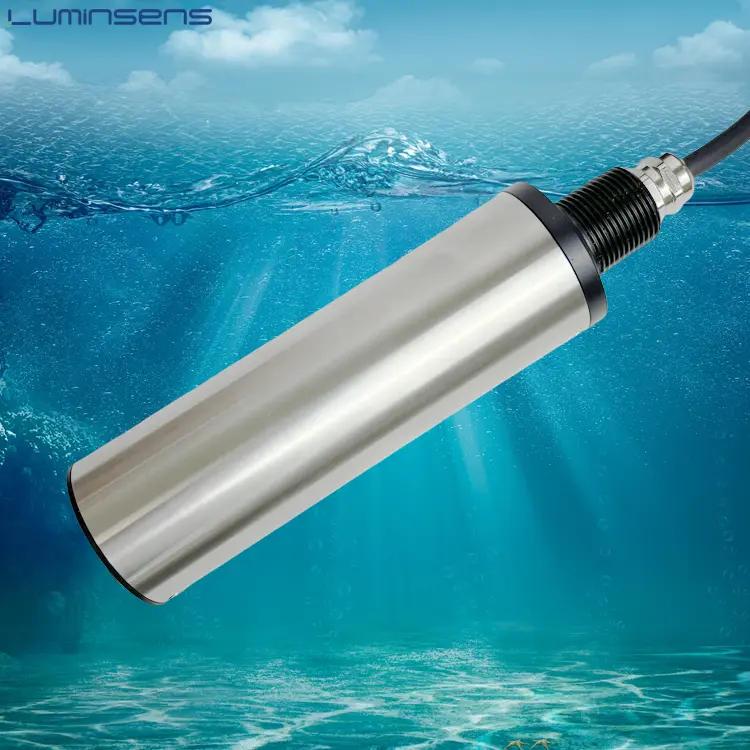
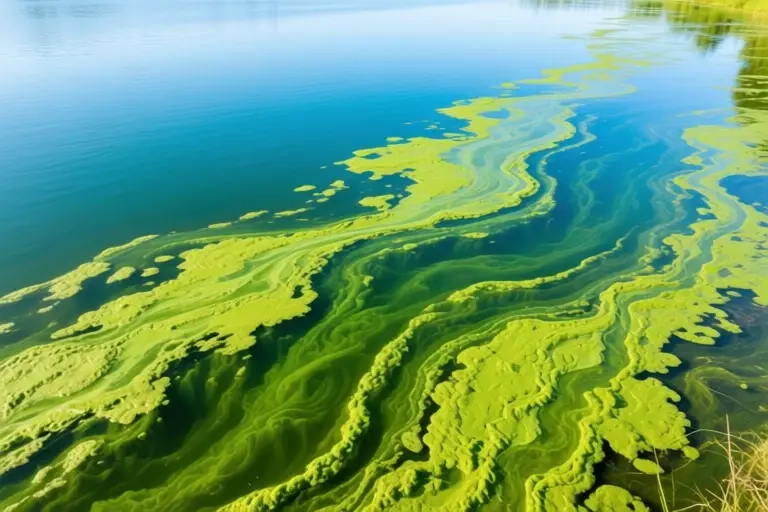
With the growing global awareness of water resource protection, water quality monitoring has become a core part of water environment management. Among numerous water quality indicators, chlorophyll-a content is a key parameter reflecting the degree of water eutrophication and algae growth. When the concentration of chlorophyll-a in water rises abnormally, it often indicates that algae such as cyanobacteria and green algae may multiply in large quantities, which can trigger algal bloom disasters and threaten drinking water safety and aquatic ecological balance. The emergence of chlorophyll water quality sensors has provided a "technological tool" for real-time and accurate monitoring of this indicator.
1. Understanding the Sensor: From Principle to Core Advantages
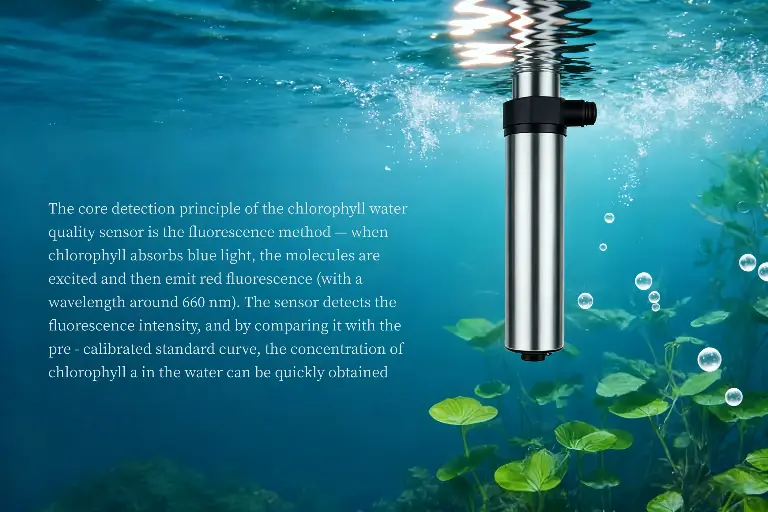
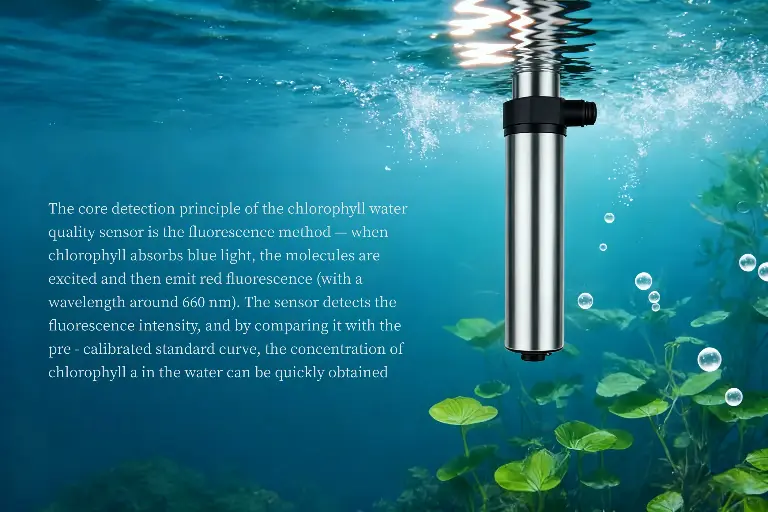
The core detection principle of chlorophyll water quality sensors is based on the "fluorescence method". Chlorophyll-a molecules, when excited by blue light of a specific wavelength (usually around 460nm), emit red fluorescence at approximately 685nm. The sensor emits excitation light of a specific wavelength, simultaneously detects the fluorescence intensity emitted by chlorophyll-a in the water, and then quickly calculates the concentration of chlorophyll-a in the water by combining it with a pre-calibrated standard curve.
Compared with traditional laboratory sampling and testing methods, such sensors have three core advantages: First, real-time performance. No manual on-site sampling or sample delivery is required, enabling 24/7 continuous monitoring to promptly capture sudden changes in chlorophyll-a concentration. Second, high precision. Some advanced sensors have a detection accuracy of up to 0.1μg/L, which can accurately identify the growth trend of low-concentration algae. Third, anti-interference capability. Through special optical design and algorithm compensation, it can effectively eliminate the impact of factors such as water turbidity and colored substances on detection results, making it suitable for complex water environments such as lakes, reservoirs, rivers, oceans, and sewage treatment plants.
2. Multi-Scenario Applications: Building a Solid Defense Line for Water Environment Safety
Currently, chlorophyll water quality sensors have been widely used in several key fields:
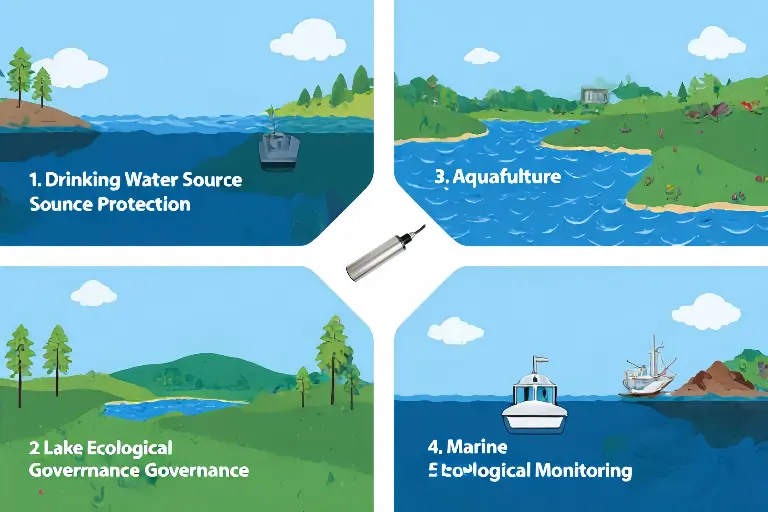
- Drinking Water Source Protection: Sensors are deployed around reservoirs and water intake points. When an increase in chlorophyll-a concentration is detected, they can early warn of the risk of algae reproduction, buying time for water plants to adjust purification processes and ensuring drinking water safety from the source;
- Lake Ecological Governance: In eutrophication-sensitive areas like Taihu Lake and Dianchi Lake in China, sensors form a monitoring system through networking, which can real-time track the distribution range and diffusion path of algae, providing data support for environmental protection departments to formulate precise algae control measures (such as ecological water transfer and chemical injection);
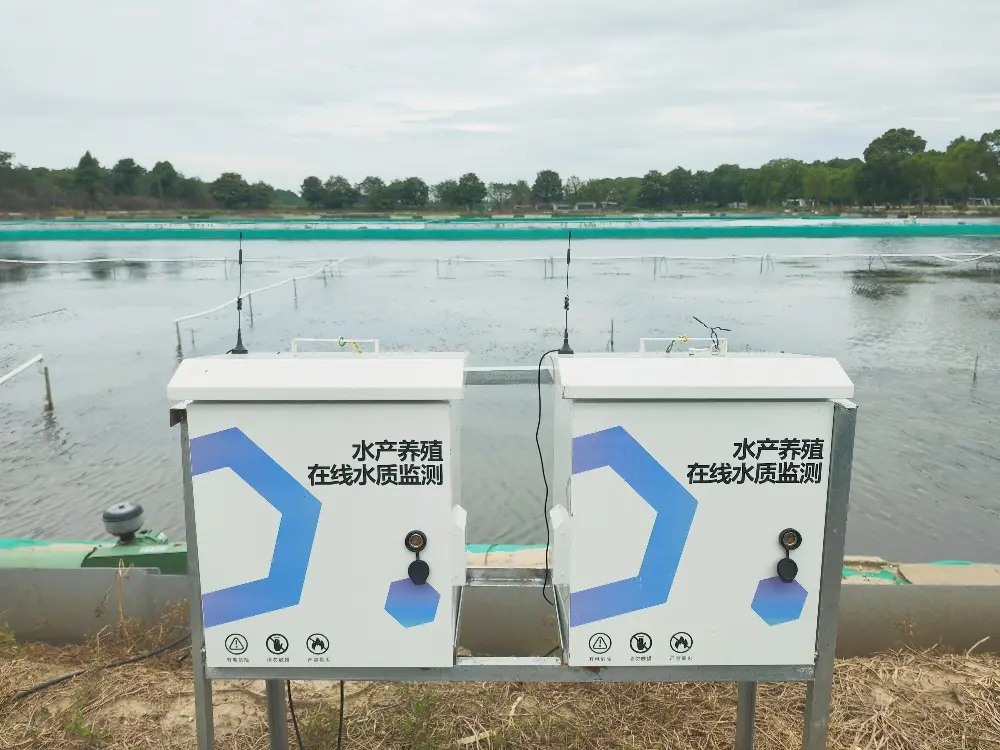
- Aquaculture: Sensors help farmers monitor the algae concentration in aquaculture water in real time, avoiding insufficient dissolved oxygen (caused by too few algae) that affects the respiration of aquaculture organisms, or water quality deterioration (caused by too many algae) that breeds harmful microorganisms, thus ensuring the healthy growth of aquaculture organisms such as fish and shrimp;
- Marine Ecological Monitoring: Combined with equipment such as buoys and underwater robots, sensors can conduct regular monitoring in coastal and oceanic areas, used for early warning and dynamic tracking of red tide disasters, reducing the damage of red tides to marine fishery and coastal tourism.
3. Industry Trends: Accelerated Advancement of Intelligence and Technological Inclusivity
With the integration of the Internet of Things (IoT) and big data technologies, chlorophyll water quality sensors are undergoing comprehensive upgrades toward "intelligence". The new generation of sensors can upload monitoring data to cloud-based management platforms in real time via wireless communication technologies such as 4G, LoRa, and NB-IoT. Managers worldwide can remotely view cross-regional water quality data trends and receive abnormal warning information through terminals like mobile phones and computers, significantly improving the efficiency of collaborative water environment management across borders and river basins.
At the same time, technological breakthroughs by global sensor enterprises in core optical components and algorithm models are driving products from "high-end niche" to "inclusive and practical". High-precisIon Sensors that previously relied on supplies from a handful of countries now have key components independently developed in multiple regions. This not only significantly reduces equipment procurement and operation costs but also enables more targeted customized monitoring solutions based on the characteristics of water bodies in different regions (such as tropical lakes, high-latitude seas, and industrial wastewater basins).
Taking a reservoir cluster monitoring project in a Southeast Asian country as an example, after deploying more than 20 chlorophyll water quality sensors based on the latest technology, the local area successfully achieved a 72-hour early warning of algae growth trends. In 2024, the emergency response efficiency for algal bloom disasters increased by 40% compared with previous years, playing a key role in ensuring the drinking water safety of tens of millions of residents and the quality of water for agricultural irrigation.
In the future, as global water environment governance needs continue to refine, chlorophyll water quality sensors will unlock value in more segmented scenarios (such as polar scientific expeditions and cross-border river joint prevention and control), becoming an "important technological link" for promoting the sustainable development of global water resources.