• instagram (5)
  • 65e82dd72e92827394
  • 65e82dd7a74e048637
  • 65e82dd83039430728
Leave Your Message

7 Tips for Choosing a Chlorine Analyser?

Choosing a Chlorine Analyser is not just a matter of comparing prices or screen sizes. The right instrument must fit the water, the process, and the people who will maintain it. A system monitoring treated drinking water may need dependable low-level readings, while a cooling-water line may face heat, deposits, and frequent process changes. Small details matter: sample flow, response time, calibration access, and whether operators can read alarms from across a noisy plant room. A polished brochure cannot answer every question.

Quality-management expert H. James Harrington wrote, “Measurement is the first step that leads to control and, eventually, to improvement.” That idea offers a useful lens for choosing an analyser: reliable data supports better decisions, but only when the instrument suits its real operating conditions. In this guide, seven practical tips cover measurement range, sensing technology, installation, maintenance, calibration, data handling, and supplier support. Look beyond the headline specification. Ask how the unit behaves when a sample line bubbles, a sensor needs cleaning, or readings drift during a busy shift. These are ordinary moments, not edge cases. No analyser is perfect, and no checklist can replace a site trial. Still, a careful comparison can prevent avoidable surprises—and help you choose a Chlorine Analyser that operators can trust day after day.

7 Tips for Choosing a Chlorine Analyser?

Set the Measurement Target: WHO Calls for 0.2 mg/L Residual at Delivery

Choosing a chlorine analyser starts with the measurement target. WHO guidance commonly references at least 0.2 mg/L free residual chlorine at the point of delivery under normal conditions. This level helps show that water retains protective disinfectant during distribution. It is not a universal setting for every site. Local water quality, temperature, pH, contact time, and regulations still matter.

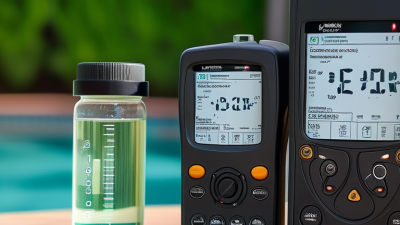
Select an analyser that measures the chlorine form your process actually controls. Free chlorine and total chlorine are not interchangeable. Confirm the instrument’s range, resolution, response time, and performance near 0.2 mg/L. The sample point matters. A reading at the treatment outlet may differ from one taken at a storage tank or delivery line. Use a clean, representative sample line with stable flow. Avoid dead legs and long tubing where chlorine can decay.

Check calibration procedures before purchase. Look for straightforward verification with a recognised reference method, such as a properly performed DPD test. Automatic cleaning can reduce deposits, but it cannot correct poor sampling. Data logging, alarm delays, and remote access are useful when residual levels change overnight. Test the analyser against manual results during commissioning and after maintenance. Small disagreements deserve investigation. They may reveal bubbles, dirty optics, reagent ageing, or sampling bias. I have seen teams trust a stable display too quickly. Stable does not always mean accurate.

Choose Free or Total Chlorine Measurement for the Sample

Choosing a chlorine analyser starts with one practical question: what does the sample require? Free chlorine measures active disinfectant, mainly hypochlorous acid and hypochlorite. Total chlorine includes free chlorine plus combined forms, such as chloramines. The difference matters. A swimming pool may need free chlorine for rapid disinfection control. A wastewater process may require total chlorine to verify that combined residues remain within the operating target.

Look at the sample before selecting the measurement. Check its pH, temperature, turbidity, organic content, and expected chlorine range. High pH can reduce the most active chlorine fraction. Warm samples may change during transport. Test quickly. Choose an analyser that matches the required response time, detection range, and sample flow. Confirm whether it supports automatic cleaning, calibration checks, and temperature compensation. These details often matter more than a long feature list.

A reliable result also depends on sampling technique. Use clean containers and avoid sunlight, air gaps, and long delays. Rinse the sample path carefully, but do not over-clean it and create contamination from detergents. Review reagent storage and expiry dates. Small errors can become large decisions. A reading may look precise while the sample is already changing. I have seen teams select total chlorine because it sounded more complete, then miss the free chlorine value needed for process control. The better choice is not always the broader measurement. It is the one that answers the actual question.

7 Tips for Choosing a Chlorine Analyser: Free or Total Chlorine?

This representative sample contains 0.50 mg/L free chlorine and 0.20 mg/L combined chlorine, giving a total chlorine residual of 0.70 mg/L as Cl₂. Choose a free chlorine analyser when the available disinfectant residual is the main control parameter. Choose a total chlorine analyser when combined chlorine, including chloramines, must also be monitored. Actual values depend on the water source, treatment process, pH, temperature, and sampling point.

Check the Test Method: ISO 7393-2 Covers 0.03–5 mg/L Chlorine

7 Tips for Choosing a Chlorine Analyser

Check the Test Method: ISO 7393-2 Covers 0.03–5 mg/L Chlorine

The test method should match your expected chlorine level. ISO 7393-2 describes a DPD photometric method for measuring free and total chlorine in water. Its stated range is typically 0.03–5 mg/L. That range suits many drinking water, pool, and process-water checks. However, the analyser’s actual range depends on its reagents, optics, and programmed procedure. Read the technical scope carefully.

Do not treat the range as a guarantee of accuracy. Near 0.03 mg/L, small handling errors can change the result noticeably. At higher levels, dilution may be necessary. A reliable analyser should show the selected method, measurement range, and detection limits clearly. It should also distinguish free chlorine from total chlorine. These values answer different operational questions.

Timing matters. Chlorine can change while a sample sits in a warm bottle or bright sunlight. Collect the sample correctly, test it promptly, and keep the cuvette clean. Residue, fingerprints, and bubbles can affect photometric readings. Check calibration with suitable standards and record unusual results rather than quietly removing them. Matrix effects may appear in coloured or chemically unusual water. This is where experience helps, although experience can still be wrong. Compare doubtful readings with an independent method and review the sample history.

Compare Accuracy, Response Time, Calibration, and Maintenance Needs

7 Tips for Choosing a Chlorine Analyser

Accuracy should match the risk of your process, not just the number on a brochure. Check performance across the expected chlorine range, temperature changes, and water quality variations. A reliable analyser should provide stable readings, clear alarm limits, and traceable calibration records. Repeatability matters too. A reading that drifts every few minutes can waste more time than a slightly slower instrument.

Response time is critical when chlorine levels change quickly. Ask how long the analyser takes to react after a sample reaches the sensor. Include sample tubing delay, not only the stated sensor response. In a plant room, this delay can be surprisingly easy to miss. I prefer testing a unit with real process water before installation. Clean laboratory water may hide fouling, air bubbles, or unstable flow. Fast is useful, but unstable fast readings are not.

Calibration and maintenance should fit the available staff and schedule. Look for simple zero and span procedures, accessible components, and reminders for cleaning or reagent replacement. Confirm whether calibration requires certified reference solutions and how often they are needed. Keep spare seals and tubing nearby. Small parts fail at inconvenient times. One practical mistake is assuming “low maintenance” means no maintenance. Sensor surfaces still need inspection, and calibration checks should be documented. If the analyser cannot be serviced safely beside the process, its theoretical accuracy may have little practical value.

Verify Compliance: The U.S. EPA Chlorine MRDL Is 4.0 mg/L

7 Tips for Choosing a Chlorine Analyser

Verify Compliance: The U.S. EPA Chlorine MRDL Is 4.0 mg/L

The U.S. EPA sets the maximum residual disinfectant level for chlorine at 4.0 mg/L. This limit applies to public drinking water systems. A suitable analyser should measure free chlorine accurately across your expected operating range. Do not choose one based on price alone. Confirm its stated accuracy, detection limit, and measurement method. Small errors can matter near a regulatory threshold.

Choose an analyser with automatic temperature compensation and stable flow control. Check whether it measures free chlorine, total chlorine, or both. Select clear calibration functions and keep certified reference solutions available. Review response time, alarm settings, and data storage before installation. Remote access can help, but it should never replace routine field verification.

Look for simple maintenance. Sensors, tubing, and sample cells should be easy to inspect and replace. In field checks, blocked lines often cause confusing readings. That detail is easy to miss. Compare analyser results with a properly performed DPD test at scheduled intervals. Investigate differences instead of adjusting the instrument immediately. Keep calibration records, maintenance notes, and alarm events together. The 4.0 mg/L MRDL is a compliance reference, not a number to approach blindly. Water temperature, demand, and changing flow conditions can affect chlorine control. Reconsider your setup when operating conditions change.

7 Tips for Choosing a Chlorine Analyser? – Verify Compliance: The U.S. EPA Chlorine MRDL Is 4.0 mg/L

No. Selection Tip What to Check Relevant Fact or Benchmark Recommended Verification
1 Define the chlorine parameter Confirm whether the application requires free chlorine, total chlorine, or both. Free chlorine generally refers to hypochlorous acid and hypochlorite ion. Total chlorine includes free chlorine plus combined chlorine compounds. Review the water-treatment process, disinfectant chemistry, and reporting requirements before selecting the measurement method.
2 Verify the measurement range Choose a range that covers normal operation, alarm limits, and reasonably foreseeable excursions. The U.S. EPA maximum residual disinfectant level (MRDL) for chlorine is 4.0 mg/L as Cl2. Ensure the analyser can measure accurately around the site’s control setpoint and the applicable regulatory threshold, rather than selecting only by maximum range.
3 Check accuracy and resolution Compare stated accuracy, repeatability, resolution, and detection capability at the intended operating concentration. An analyser may display a fine resolution without providing equivalent measurement accuracy; these specifications should be evaluated separately. Request performance data from calibration checks or independent testing using standards appropriate for the application.
4 Assess response time Consider sample transport time, analyser response time, and the time required to trigger a control action. A faster response can help identify disinfectant changes sooner, but the actual system response also depends on flow rate, tubing length, mixing, and sample conditioning. Evaluate the complete sampling loop under real operating conditions instead of relying only on the instrument’s laboratory response specification.
5 Review calibration and maintenance Check calibration frequency, reagent or membrane requirements, cleaning tasks, and consumable replacement intervals. Calibration practices depend on analyser design, water quality, operating conditions, and the required quality-assurance program. Estimate annual labor, consumables, verification standards, downtime, and disposal requirements before purchase.
6 Confirm sample compatibility Evaluate pH, temperature, turbidity, suspended solids, flow, pressure, and possible chemical interferences. Chlorine measurements can be affected by sample conditions and by the presence of substances that consume or interfere with chlorine chemistry. Perform a site-specific sample assessment and use suitable filtration, pressure regulation, temperature control, or conditioning where required.
7 Verify compliance and data handling Check alarm outputs, data logging, audit trails, calibration records, and compatibility with the site’s reporting process. The U.S. EPA chlorine MRDL is 4.0 mg/L as Cl2. The applicable regulatory requirement may also depend on jurisdiction, sampling location, and monitoring program. Document the applicable authority, measurement units, sampling plan, acceptance criteria, alarm limits, and corrective-action procedure.
Regulatory reference: The U.S. EPA maximum residual disinfectant level (MRDL) for chlorine is 4.0 mg/L as Cl2. Confirm the current requirements that apply to the specific water system and jurisdiction before using this value for compliance decisions.