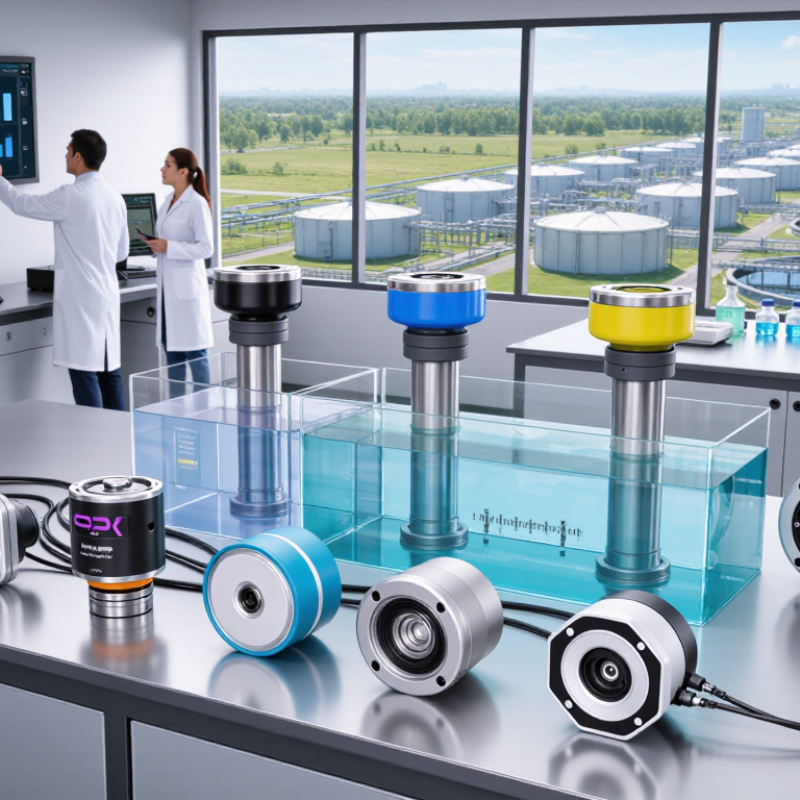
China’s Cod Sensor industry is gaining attention as water utilities, factories, and laboratories seek faster chemical oxygen demand monitoring. The global wastewater treatment market was valued at approximately USD 281 billion in 2023, according to Grand View Research. Meanwhile, the United Nations World Water Development Report estimates that over 80% of wastewater worldwide is discharged without adequate treatment. These figures show why reliable online measurement matters.
A modern Cod Sensor can replace repeated laboratory sampling with continuous readings near industrial discharge points, treatment tanks, and process pipelines. Yet product quality differs widely. Buyers should examine optical stability, calibration requirements, detection range, response time, temperature compensation, and service support. A low purchase price may become expensive when cleaning is frequent or replacement lamps are unavailable.
Professor William J. Cooper, a recognized water-quality researcher, has emphasized that “the complexity of wastewater makes reliable measurement essential.” His observation remains practical for global buyers. COD readings can drift when suspended solids, color, or biofilm interfere with optical paths. Chinese manufacturers therefore need to demonstrate field validation, not only attractive laboratory results.
This guide reviews China’s leading Cod Sensor manufacturers through technical capability, production experience, documentation, and export support. It also considers ISO-based quality systems and method comparability with established laboratory procedures. No ranking is perfect. Site conditions change everything. The strongest supplier is not always the largest one; it is the company that explains limitations clearly, provides traceable calibration data, and supports engineers after installation.
Understanding COD Sensors and Their Industrial Applications
Chemical oxygen demand, or COD, indicates how much oxygen organic pollutants may consume in water. Modern COD sensors often use ultraviolet absorption to estimate this value continuously. They measure water through a flow cell, reducing the delays of laboratory digestion tests. Clean optical windows matter. A thin film can distort readings within hours.
In municipal treatment plants, operators use COD sensors to track influent changes and control aeration. Food factories monitor wastewater after cleaning, production shifts, and raw material changes. Pharmaceutical, textile, and chemical facilities may also need frequent organic-load checks. Chinese manufacturers increasingly supply online probes, transmitters, and complete monitoring systems for global buyers. Buyers should verify calibration methods, detection ranges, materials, and support for local power standards.
Installation experience affects accuracy as much as sensor design. Turbulent, representative sampling usually gives better results than stagnant tank placement. Automatic cleaning can reduce fouling, but it cannot fix poor sampling. Operators should compare sensor values with laboratory COD results during commissioning and after major process changes. Correlation is not perfect. Suspended solids, colored compounds, and unusual chemicals can confuse optical measurements. I would treat the sensor as a decision tool, not an unquestionable judge. That small distinction prevents expensive control errors. Regular maintenance records also reveal whether a system is genuinely reliable.
When evaluating Chinese COD sensor manufacturers, begin with measurement credibility, not catalogue language. Ask whether the sensor uses UV absorption, chemical digestion, or a validated correlation model. Each method responds differently to color, suspended solids, and oxidizing compounds. Request raw-data examples from wastewater resembling your own process. A clean laboratory sample proves little.
Examine calibration discipline and production consistency. Reliable suppliers should provide calibration records, serial-level test results, and defined acceptance limits. Check how often sensors are recalibrated and who performs the work. Look for traceable reference materials, documented firmware changes, and controlled assembly procedures. Certification matters, but it should match the destination market and installation environment. Do not confuse a certificate with field accuracy.
During supplier audits, inspect sealing, connector protection, and the sample-contacting window. A sensor beside an aeration tank faces vibration, bubbles, fouling, and temperature swings. Ask for data from a 30-day pilot, including drift, cleaning intervals, response time, and failed readings. Support quality also matters: clear manuals, replacement parts, training, and responsive technical communication reduce downtime. I would still question optimistic promises. One overlooked issue can distort procurement decisions.
The chart presents a practical procurement framework for global buyers. Compliance, measurement reliability, application fit, integration capability, and after-sales support should be evaluated together rather than by price alone.
Suggested evaluation weights are expressed as percentages and can be adjusted according to wastewater type, installation environment, regulatory requirements, and total cost of ownership.
China-based COD sensor manufacturers increasingly serve municipal, industrial, and laboratory water-treatment projects worldwide. Their product ranges may include optical UV254 sensors, online analyzers, flow cells, and controller systems. Experienced manufacturers usually discuss sample temperature, turbidity, chloride levels, and installation conditions before recommending a model. That practical step matters. A sensor designed for clear laboratory water may perform poorly in colored textile wastewater.
Reliable suppliers normally provide calibration records, inspection data, wiring diagrams, and operating instructions. Buyers should ask how each sensor is tested against laboratory COD results. UV-based systems estimate organic pollution through light absorption, so they require site-specific correlation. Proper cleaning schedules also help control fouling from oil, sludge, or biological growth. Traceable serial numbers and responsive technical support can make long-term maintenance less uncertain.
Not every specification is equally meaningful. Some suppliers highlight detection range but explain little about drift, response time, or interference. I would question that. Factory experience is useful, yet field validation remains essential. A pilot installation can compare sensor readings with approved laboratory methods across several weeks. Even then, the correlation may change after seasonal process variations. Global buyers should review documentation carefully, confirm export packaging, and clarify software compatibility before placing large orders. Small details matter.
Comparing Product Performance, Compliance, Pricing, and Support
China’s leading COD sensor manufacturers offer optical, ultraviolet, and reagent-based systems for wastewater monitoring. Optical sensors often reduce chemical handling and routine operating costs. However, performance depends on water color, suspended solids, and organic compounds. A sensor tested in clean laboratory water may behave differently beside an industrial discharge pipe. Buyers should request detection limits, response time, drift data, and results from real wastewater trials. Stable readings matter more than impressive brochure specifications.
Compliance needs careful checking. Reliable suppliers can provide calibration certificates, factory test records, electrical safety documents, and material declarations. Depending on the destination, buyers may also require CE, RoHS, EMC, or local environmental approvals. Certification names alone prove little. Verify the certificate number, issuing body, and covered model. This step is easy to overlook. It should not be.
Pricing should include installation, calibration, cleaning, replacement parts, and data integration. A low purchase price may hide frequent maintenance or expensive probes. Ask whether the controller supports common industrial protocols, such as Modbus RTU or TCP. Technical support is equally practical. Good suppliers provide wiring diagrams, firmware guidance, spare-part availability, and remote commissioning. Response times should be written into the agreement. Even experienced teams can misjudge fouling risks, especially in warm, high-solids channels. Pilot testing remains the safer investment.
China Top COD Sensor Manufacturers for Global Buyers
Selecting a COD sensor supplier requires more than comparing prices and product photos. Define your water matrix, expected COD range, temperature, turbidity, and installation method. A sensor for clear laboratory samples may perform poorly in dark wastewater. Ask for detection limits, response time, measurement principles, and interference data. Reliable suppliers should provide calibration procedures, test records, technical drawings, and traceable quality documents.
Tips: Request a sample evaluation before bulk purchasing. Test it with your actual wastewater, not only clean water. Check how often calibration is needed, how easily the optical window can be cleaned, and whether replacement parts are available. Confirm communication speed, software compatibility, warranty terms, and export packaging. A responsive engineer can prevent expensive downtime. However, written support is still important.
Field experience shows that the cheapest sensor is rarely the lowest-cost choice. Maintenance labor, unstable readings, and delayed spare parts can change the calculation quickly. Review the supplier’s production experience, inspection process, and after-sales response with specific questions. Ask for references from similar applications, while treating polished case studies carefully. No selection is perfect. Sensor drift may still occur, especially when solids or bubbles increase. Build acceptance criteria before ordering, including accuracy, repeatability, installation conditions, and refund or replacement procedures. A small pilot order may feel slower, but it exposes weaknesses before a larger commitment.
| Evaluation Dimension | Recommended Benchmark or Typical Technical Data | Suitable Application | What Global Buyers Should Verify | Procurement Priority |
|---|---|---|---|---|
| Measurement Principle |
UV-Vis optical estimation Uses ultraviolet absorbance, commonly including the UV-C range, to estimate organic load through a site-specific correlation. |
Continuous monitoring of relatively stable wastewater streams, influent screening, process control and discharge trend analysis. | Request the correlation model, calibration dataset, interference study and comparison against laboratory COD results from the buyer’s own wastewater. | Critical |
| Measurement Principle |
Dichromate digestion and photometric analysis Based on the wet-chemical COD method using digestion, oxidation and photometric measurement. |
Applications requiring closer alignment with laboratory COD reference methods and wastewater containing variable organic compounds. | Confirm digestion temperature, reaction time, reagent composition, chloride compensation and compatibility with the selected reference method. | Critical |
| Measurement Range | Common online configuration ranges include 0–100 mg/L, 0–1,000 mg/L or 0–5,000 mg/L. The correct range depends on the wastewater matrix. | Municipal wastewater, industrial effluent, food processing, chemical production, pulp and paper, and landfill leachate. | Use at least 20–30% headroom above the normal maximum concentration while avoiding an unnecessarily wide range that reduces resolution. | Critical |
| Accuracy and Repeatability | A practical purchasing target is approximately ±5% of full scale or the better value of ±5% of reading, subject to sample composition and calibration conditions. | Regulatory reporting support, process optimization and performance trending. | Ask for repeatability data, zero and span stability, uncertainty calculations, and test results using representative wastewater rather than clean water only. | Critical |
| Reference Standards | Relevant laboratory references may include ISO 15705:2002, ISO 6060:1989, EPA Method 410.4 and Standard Methods 5220, where applicable. | Projects involving international laboratories, environmental compliance, tenders and third-party validation. | Confirm which standard is used for calibration and whether the online result is intended as a direct compliance result or an operational indicator. | Critical |
| Response Time | Optical systems can provide readings in seconds to minutes. Digestion-based analyzers commonly require a longer cycle because heating, reaction and cleaning are involved. | Fast process control favors optical measurement; compliance-oriented sampling may accept a longer digestion cycle. | Verify complete cycle time, update frequency, warm-up time, measurement delay and behavior during sample interruption or high turbidity. | High |
| Sample and Interference Handling | Key interference factors may include suspended solids, turbidity, color, nitrate, chloride, bubbles, oil, scaling and biological growth. | Industrial wastewater and mixed wastewater with changing composition or high solids content. | Request filtration requirements, automatic cleaning method, anti-bubble design, maximum solids loading, chloride compensation range and fouling test results. | Critical |
| Maintenance and Consumables | Optical systems may reduce reagent consumption but still require cleaning, calibration and optical-window inspection. Digestion systems require reagents, tubing and periodic cleaning. | Remote sites, facilities with limited technical staff and installations with strict operating-cost targets. | Calculate annual reagent use, replacement parts, cleaning frequency, calibration labor, service response time and total cost of ownership. | High |
| Environmental Protection | Outdoor installations should normally be evaluated for an enclosure rating such as IP65 or higher, suitable operating temperature, humidity resistance and corrosion protection. | Open-air treatment plants, coastal facilities, high-humidity areas and chemically aggressive industrial environments. | Check the actual certification scope, not only the enclosure label. Confirm temperature limits, material compatibility, condensation protection and installation requirements. | High |
| Electrical and Communication Interfaces | Common integration options include 4–20 mA, relay outputs, RS-485 and digital protocols such as Modbus RTU or Modbus TCP, depending on the configuration. | SCADA integration, plant-wide data management, alarm systems and remote monitoring. | Confirm signal isolation, scaling, alarm logic, data logging, time synchronization, cybersecurity requirements and compatibility with the existing PLC or SCADA system. | High |
| Calibration and Validation | Calibration frequency is application-dependent. A practical commissioning plan should compare online readings with laboratory COD results over different flow and concentration conditions. | Wastewater with seasonal variation, changing production recipes or multiple influent sources. | Require a commissioning protocol, minimum validation sample count, acceptable deviation limits, calibration ownership and documented recalibration procedures. | Critical |
| Documentation and Global Support | Essential documents include datasheets, installation drawings, user manuals, wiring diagrams, certificates, spare-parts lists and factory test records. | International EPC projects, distributor-led installations and multi-site deployments. | Evaluate English documentation, remote technical support, training, warranty duration, spare-parts availability and local service capability in the destination country. | High |
| Purchase and Acceptance Criteria | A robust purchase specification should define range, accuracy, response time, sample conditions, communication protocol, environmental rating, warranty and acceptance testing. | Competitive tenders, direct factory purchasing and projects requiring predictable long-term performance. | Use wastewater from the actual site for factory or site acceptance testing whenever possible. Link final payment to documented performance criteria. | Critical |