How to Choose the Right Water Current Meter?
Choosing the right Water Current Meter begins with a clear understanding of the measurement site. River depth, flow speed, sediment load, temperature, and access conditions all influence the decision. A device that performs well in a calm laboratory channel may struggle in a shallow, debris-filled stream.
William Thomson, Lord Kelvin, a respected authority on measurement, once said, “When you can measure what you are speaking about, you know something about it.” That principle remains important in modern hydrometry. A reliable Water Current Meter should produce accurate readings, support repeatable field work, and match the operator’s experience. Mechanical meters can offer practical durability and simple maintenance. Electromagnetic and acoustic models may provide faster data collection, especially where flow changes quickly.
Do not choose by specifications alone. Check the instrument’s measurement range, calibration records, battery life, sensor design, software, and service support. A technician standing knee-deep in cold water needs more than impressive accuracy claims. They need a stable display, secure cables, and controls that work with wet gloves.
There is no perfect meter. Every choice involves compromise. My own judgment can also be incomplete when site conditions change unexpectedly. Therefore, compare manufacturer data with independent testing, published hydrometric guidance, and real field reports. Consider whether the instrument can be calibrated locally and repaired without excessive downtime. The best Water Current Meter is not always the most advanced model. It is the one that delivers dependable results in the exact water environment where decisions must be made.
Understanding What a Water Current Meter Measures
How to Choose the Right Water Current Meter?
At its core, a water current meter measures how fast water moves past a measurement point. That value is velocity, usually recorded in meters per second. Some instruments also identify flow direction. However, a meter does not automatically measure discharge. Discharge requires velocity, channel area, and a method for combining readings across the section. This difference matters when selecting equipment for river surveys, drainage channels, or laboratory testing.
A meter reading is local. Water near the surface may move faster than water beside the bed, where gravel creates friction. Curves, stones, vegetation, and sudden depth changes can also produce turbulence. For this reason, technicians often take measurements at several depths and across multiple sections.
A shallow stream may need a compact point meter. Deeper or wider water may require a sensor that records conditions through a larger vertical profile. The best choice depends on depth, expected velocity, water clarity, and the required accuracy.
Calibration records deserve close attention. A clean display can still show a poor result if the sensor is damaged or incorrectly positioned. Keep the sensing element aligned with the flow, and record water depth, location, weather, and unusual disturbances.
Do not treat one reading as the whole river. That shortcut is tempting. Even careful fieldwork has weak points, especially during rapidly changing flow. Reviewing repeated measurements can reveal patterns that a single impressive number might hide.
Identifying the Waterway and Measurement Conditions
How to Choose the Right Water Current Meter?
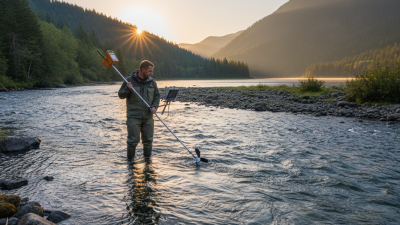
Identifying the waterway comes before choosing the instrument. A narrow mountain stream behaves differently from a deep irrigation canal or tidal estuary. Measure the channel width, depth, flow direction, and bed condition. Note rocks, weeds, loose sediment, and sudden turbulence. These details affect sensor placement and reading stability. A shallow stream may need a compact meter with a short shaft. A deep channel may require a cable, wading rod, or remote deployment system. In tidal water, record the measurement time and tide stage. Flow can reverse within hours.
Measurement conditions matter just as much. Check whether the water is clear, muddy, cold, or filled with floating debris. Optical sensors may struggle with heavy sediment or poor visibility. Mechanical meters can offer useful results, but moving parts need careful inspection. Before fieldwork, verify the meter against its operating instructions and inspect the cable, probe, and display. I still occasionally misjudge turbulence near a bend. That mistake reminds me to repeat measurements at different points.
Tips: Sketch the cross-section before measuring. Mark each sampling position. Keep the probe at a consistent depth and orientation. Take several readings instead of trusting one number. Record weather, recent rainfall, water level, and unusual obstructions. A clean field log often explains inconsistent data better than a complicated calculation. Calibration records, operator experience, and documented uncertainty make the final result more defensible.
How to Choose the Right Water Current Meter?
Identifying the waterway and measurement conditions
The chart shows representative velocity ranges commonly associated with different current-meter methods.
Mechanical meters are practical for wading streams, electromagnetic meters perform well in shallow or low-velocity water,
acoustic Doppler velocimeters are useful for point measurements, and ADCP systems are suited to deeper rivers and moving boats.
Actual limits depend on water depth, sediment, turbulence, temperature, signal quality, and the instrument specification.
Comparing Water Current Meter Types and Technologies
Choosing the right water current meter starts with understanding the measurement site, not the equipment catalog. Mechanical meters use rotating cups or propellers to measure point velocity. They are practical in clear streams and familiar to many field technicians. However, weeds, sediment, and low flow can slow the rotor and distort readings. Regular inspection and calibration remain essential.
Electromagnetic meters have no moving parts, making them useful in shallow, debris-filled water. They perform best when the water conducts electricity adequately. Acoustic Doppler meters measure velocity through sound reflections and can profile changing currents across deeper channels. They provide more information, but air bubbles, turbulence, and suspended material may reduce data quality. Radar-based systems measure surface velocity from above, which helps during floods or unsafe conditions. Their results can change with wind, surface waves, and unusual channel geometry. No method is perfect. I have found that convenient data can still hide weak assumptions.
Tips: Match the meter to depth, velocity range, conductivity, and sediment conditions. Check calibration records before fieldwork. Take repeated readings at different points, especially near banks and bends. Record water level, weather, and visible debris beside every measurement. A short training session can prevent expensive errors. Also, question unusually smooth results; real rivers are rarely that cooperative. Use independent checks when the data will support engineering or environmental decisions.
Evaluating Accuracy, Range, Durability, and Maintenance
Choosing a water current meter starts with the measurement question, not the product catalog. Accuracy depends on flow speed, turbulence, temperature, and sensor placement. Check the stated uncertainty across your expected range. A meter rated for fast rivers may respond poorly in a slow drainage channel. For shallow streams, a compact sensor with a stable mounting rod can reduce positioning errors. Record a zero-flow check before each survey. Small errors matter.
Match the measuring range to real conditions, including seasonal low flows and sudden surges. Avoid using the sensor at the edge of its specified range. Run a short test at several locations when turbulence is visible. Durability means more than a sealed case. Inspect the cable jacket, connectors, mounting threads, and moving parts after every field visit. Grit trapped around a rotor can create drag and false readings. No instrument stays perfect.
Maintenance should be simple enough for routine field use. Rinse the sensor with clean water, remove sediment gently, and let it dry before storage. Never force a stiff rotor. Follow the manufacturer’s calibration interval, but do not treat paperwork as proof of current accuracy. A competent laboratory calibration certificate adds confidence, especially for regulatory surveys. Between calibrations, compare readings with a trusted reference meter under similar conditions. Keep dates, flow conditions, battery status, and operator notes in a field log. If readings drift without a clear cause, pause the survey and investigate. Do not guess.





 Contact WhatsApp
 Contact Phone
 Contact Email